
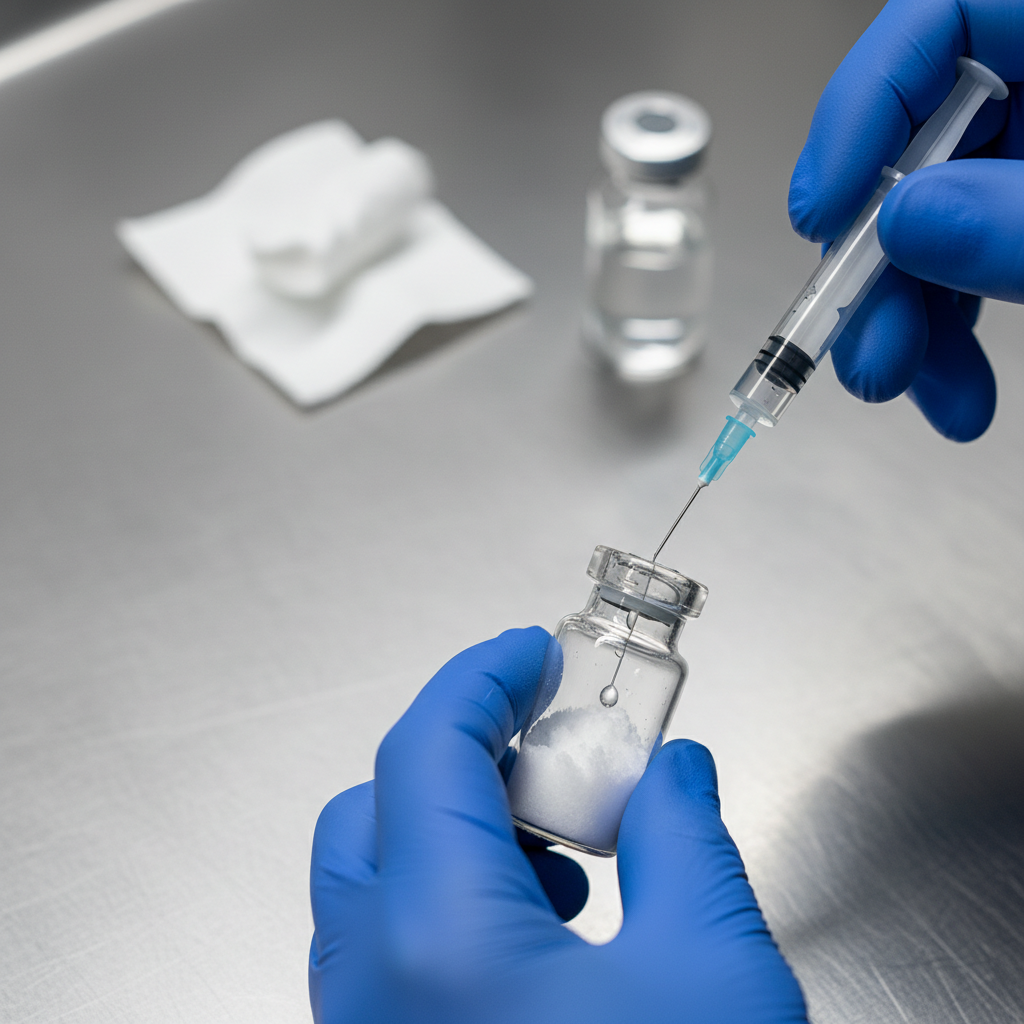
Peptide reconstitution is the process of adding a liquid solvent to a lyophilized (freeze-dried) peptide powder to create a solution for laboratory use. Proper reconstitution technique is critical for ensuring the peptide’s stability, concentration accuracy, and the overall validity of experimental results. This process is a fundamental step in preparing peptides for in-vitro research and analysis.
This guide outlines the standard laboratory procedure for reconstituting peptides. All compounds and supplies mentioned are intended strictly for laboratory Research Use Only (RUO) and are not approved for human or veterinary use, medical applications, or cosmetic purposes. Adherence to correct handling protocols ensures the integrity of the research material and the reproducibility of study outcomes.
What is peptide reconstitution for laboratory research?
In a laboratory context, peptide reconstitution is the essential process of dissolving a lyophilized peptide in a suitable sterile solvent to prepare it for experimental use. Peptides are often supplied in a freeze-dried, powdered state to maximize their long-term stability. Reconstitution transforms the powder into a liquid solution of a known concentration, allowing for precise administration in research applications such as cell culture assays, binding studies, and other in-vitro analyses.
Proper technique is paramount for achieving accurate and reproducible results. The choice of solvent, the method of mixing, and the final storage conditions all impact the peptide’s structural integrity and biological activity. An improperly prepared peptide solution can lead to degradation, inaccurate concentration, and ultimately, unreliable experimental data. Therefore, following a standardized protocol is a critical component of rigorous scientific investigation.
A Note on Research Use Only (RUO): All peptides and the supplies used to reconstitute them are intended solely for laboratory research purposes. These materials are not for human consumption, veterinary use, or any form of diagnostic or therapeutic application. The procedures described here are for controlled, in-vitro laboratory settings only.
What supplies are essential for peptide reconstitution?
To ensure sterility and accuracy, researchers must use the proper laboratory supplies for peptide reconstitution. Using incorrect or non-sterile equipment can lead to contamination and compromise the integrity of the research peptide. The standard solvent for most research peptides is bacteriostatic water, which is sterile water containing a small amount of benzyl alcohol to prevent bacterial growth in multi-use vials.
The following table outlines the essential supplies for this procedure:
| Supply | Function in the Laboratory |
|---|---|
| Lyophilized Peptide Vial | Contains the research peptide in a stable, powdered form. |
| Reconstitution Solvent | The sterile liquid, typically Bacteriostatic Water, used to dissolve the peptide. |
| Sterile Syringe | Used for accurately measuring and transferring the solvent into the peptide vial. |
| Alcohol Prep Pads | Used to sterilize the rubber stoppers of the vials before puncture. |
| Laboratory Gloves & Goggles | Essential personal protective equipment (PPE) for maintaining a sterile environment and ensuring lab safety. |
How do researchers reconstitute lyophilized peptides (step-by-step)?
The reconstitution process must be performed with care to maintain the peptide’s integrity and ensure accurate concentration. Researchers should follow a methodical, sterile technique from start to finish. The goal is to fully dissolve the peptide powder without causing degradation through vigorous shaking or contamination.
Here is a standard step-by-step laboratory protocol for reconstituting a lyophilized peptide:
- Prepare the Vials: Gather the lyophilized peptide vial and the vial of reconstitution solvent (e.g., bacteriostatic water). Use an alcohol prep pad to wipe the rubber stoppers on both vials to ensure a sterile surface.
- Calculate Solvent Volume: Determine the correct volume of solvent needed to achieve the desired peptide concentration for the experiment. This calculation is critical for reproducible research outcomes.
- Draw the Solvent: Using a new sterile syringe, carefully draw the calculated volume of solvent from its vial.
- Inject the Solvent: Insert the syringe needle through the center of the peptide vial’s rubber stopper. Angle the needle so the solvent runs down the inside wall of the vial, rather than spraying directly onto the peptide powder. This gentle introduction helps prevent potential damage to the peptide structure.
- Dissolve the Peptide: Once the solvent is added, gently swirl the vial or roll it between the palms. Do not shake the vial, as this can cause the peptide to degrade. Continue gentle mixing until the powder is fully dissolved and the solution is clear.
- Label and Store: The peptide is now reconstituted. The vial should be clearly labeled with the concentration and date of reconstitution before being stored under appropriate conditions for the specific peptide.
How should reconstituted peptides be stored for stability?
Proper storage of reconstituted peptide solutions is crucial for preserving their biological activity and ensuring the validity of long-term experiments. Once a peptide is in a liquid solution, it is generally less stable than in its lyophilized form. Storage conditions can significantly impact its degradation rate.
The standard practice for short-term storage (a few days) is refrigeration at 2-8°C. For long-term storage, reconstituted peptide solutions should be stored frozen, typically at -20°C or, for maximum stability, at -80°C. To avoid degradation caused by repeated freeze-thaw cycles, researchers often aliquot the solution into smaller, single-use volumes before freezing. This allows a fresh vial to be used for each experiment.
The optimal storage conditions can vary depending on the specific peptide sequence and the solvent used. Some peptides are more susceptible to degradation than others. Researchers should always consult any available product-specific data sheets or literature for guidance on the stability and recommended storage protocol for the particular compound being studied.
Frequently Asked Questions
How do you reconstitute a research peptide?
To reconstitute a research peptide, a sterile solvent like bacteriostatic water is slowly injected into the vial of lyophilized powder. The vial is then gently swirled until the powder is fully dissolved. This process is done under sterile laboratory conditions to prepare the peptide for in-vitro experiments.
What is bacteriostatic water used for?
Bacteriostatic water is sterile water containing 0.9% benzyl alcohol, which acts as a preservative to inhibit bacterial growth. In laboratory settings, it is the standard solvent used to reconstitute lyophilized research peptides and other compounds for use in experiments where multiple withdrawals from a single vial are necessary.
How should I store peptides after reconstitution?
After reconstitution, peptide solutions should be stored refrigerated at 2-8°C for short-term use or frozen at -20°C to -80°C for long-term stability. To prevent degradation, it is best practice to aliquot the solution into smaller volumes to avoid repeated freeze-thaw cycles. All storage is for laboratory research purposes only.
What supplies are needed to reconstitute peptides?
The essential supplies for reconstituting peptides in a lab setting are the lyophilized peptide vial, a sterile reconstitution solvent like bacteriostatic water, sterile syringes for accurate measurement, and alcohol prep pads to sterilize vial stoppers. Appropriate personal protective equipment (PPE) is also required.