
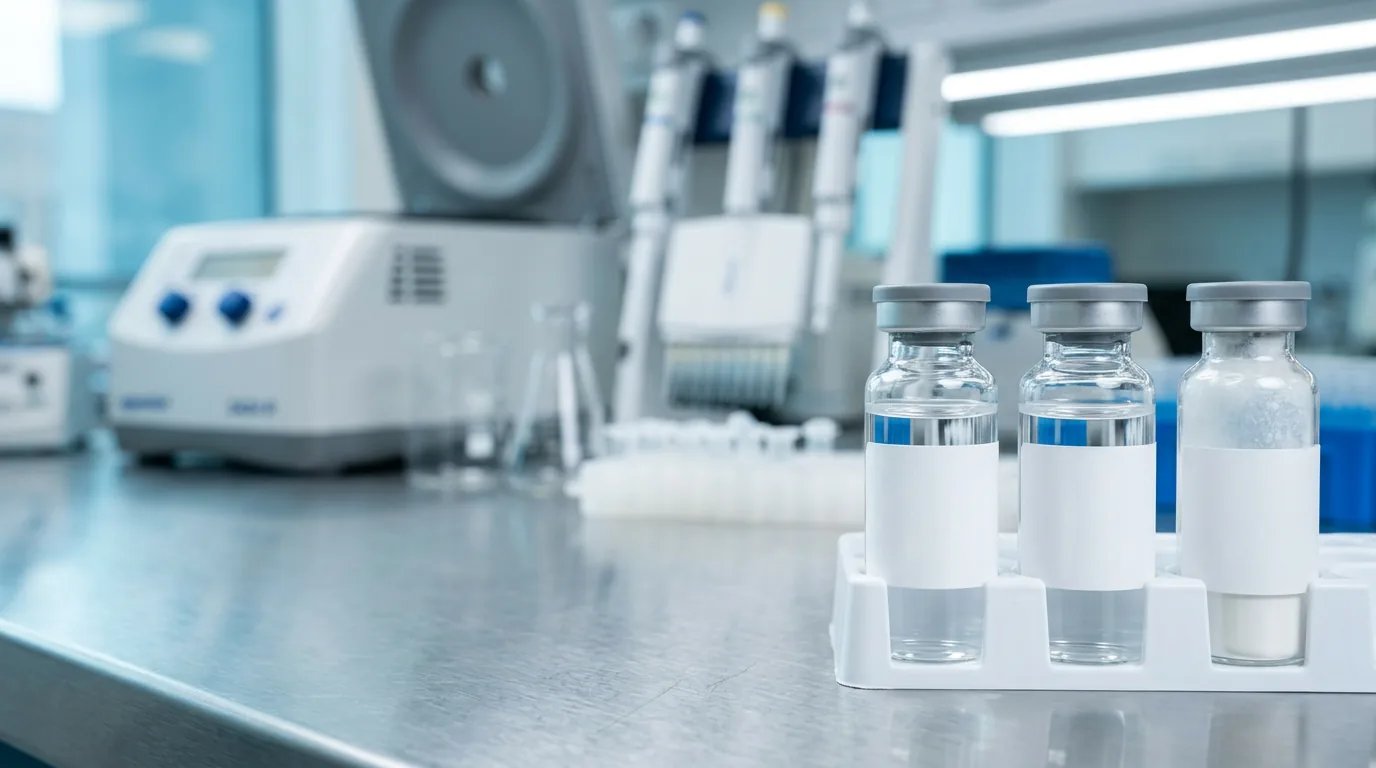
When comparing bacteriostatic water vs sterile water in laboratory settings, the primary distinction is that bacteriostatic water contains 0.9% benzyl alcohol to prevent bacterial growth for up to 28 days, while sterile water contains no preservatives for single-use reconstitution. Researchers utilizing lyophilized peptides require bacteriostatic water for multi-draw vial stability, whereas sterile water is reserved for immediate, single-use in-vitro assays. Both bacteriostatic water and sterile water are sold strictly for in-vitro laboratory research use only (RUO) and are never intended for human consumption or medical administration.
Strictly for Research Use Only (RUO): The materials, solvents, and protocols discussed below are intended exclusively for controlled in-vitro laboratory research. They are not for human or animal consumption, nor for diagnostic, therapeutic, or cosmetic applications. Maintaining this strict separation is a fundamental requirement of laboratory compliance.
What is the difference between bacteriostatic water and sterile water?
Bacteriostatic water contains 0.9% benzyl alcohol as a preservative to inhibit bacterial growth, permitting repeated withdrawals for up to 28 days after first puncture when stored aseptically[1][2]. In contrast, sterile water contains no added bacteriostat, antimicrobial, or buffer, and is supplied exclusively for single-use laboratory reconstitution[3][4].
Bacteriostatic Water for Injection, USP is a sterile, nonpyrogenic preparation of water containing exactly 0.9% (9 mg/mL) benzyl alcohol[1]. The benzyl alcohol functions as a bacteriostatic agent, which means it suppresses microbial reproduction rather than actively killing all organisms[5][6]. This specific formulation allows researchers to utilize a single multi-dose vial over a 28-day in-use period without compromising the stability or sterility of the reconstituted research compound[7][8]. In laboratory environments evaluating peptide stability over extended periods, this bacteriostatic protection is an absolute requirement to prevent sample degradation.
Sterile Water for Injection, USP is chemically defined as H₂O meeting highly purified standards, but it entirely lacks any preservative agents[9][10]. Because no antimicrobial compounds are present to inhibit bacterial growth, any unused portion of sterile water must be discarded immediately after a single draw to avoid contamination[3][4]. Both solvents are critical for peptide reconstitution in laboratory environments, but their specific applications depend entirely on whether the analytical assay requires multi-day compound stability or immediate, single-session testing.
Researchers sourcing bacteriostatic water must ensure they match the solvent’s preservative profile to their specific methodological requirements. Utilizing sterile water for a multi-day study would rapidly invalidate the research data due to unchecked microbial proliferation, while utilizing bacteriostatic water in an assay highly sensitive to benzyl alcohol could artificially alter the cellular response. Therefore, understanding the distinct chemical profiles of these diluents is foundational to accurate in-vitro methodology.
How do bacteriostatic and sterile water compare in laboratory research?
Researchers utilizing lyophilized peptides require bacteriostatic water with 0.9% benzyl alcohol for multi-draw vial stability, while sterile water is reserved for immediate, single-use in-vitro assays. Bacteriostatic water maintains sterility for up to 28 days post-puncture[8][6], whereas sterile water must be discarded immediately after a single draw[3][10].
| Feature | Bacteriostatic Water | Sterile Water |
|---|---|---|
| Preservative | 0.9% benzyl alcohol (9 mg/mL)[1] | None[10] |
| Laboratory Use Case | Multi-draw vial reconstitution[7] | Immediate, single-use assays[3] |
| In-Use Shelf Life | Up to 28 days after first puncture[8] | Discard immediately after one use[4] |
| Microbial Protection | Inhibits bacterial growth[2] | No antimicrobial protection[9] |
| pH Range | Typically 4.5 to 7.0[5] | Typically 5.0 to 7.0[9] |
When designing in-vitro laboratory protocols, researchers select the solvent based on the timeline of the investigation. A multi-day study utilizing a single vial of lyophilized compound mandates the bacteriostatic protection of benzyl alcohol[9][11]. Without this preservative, the reconstituted peptide would be highly susceptible to rapid bacterial degradation, ruining the integrity of the experiment. The 28-day stability window provided by the benzyl alcohol ensures that the concentration and purity of the peptide remain consistent across multiple testing phases.
Conversely, a protocol requiring the entire vial to be utilized in a single session relies on sterile water. This avoids the introduction of any preservative agents into the assay, which is critical for highly sensitive cellular in-vitro models where benzyl alcohol might interfere with the observed mechanisms[3][4]. For example, certain cell cultures may exhibit altered signaling pathways when exposed to preservatives, necessitating a completely pure, unbuffered diluent. Understanding these distinct applications ensures that laboratory personnel maintain both the stability of their research materials and the precision of their experimental data, avoiding costly methodological errors.
What does Research Use Only (RUO) mean for reconstitution solvents?
RUO solvents and compounds are strictly for in-vitro laboratory research and are not for human, medical, veterinary, or cosmetic use. Laboratory protocols must strictly separate research-grade solvents from clinical or therapeutic applications to maintain compliance and safety standards.
| Compliance Criteria | Why it Matters | Laboratory Implementation |
|---|---|---|
| In-Vitro Restriction | RUO materials are not manufactured for biological administration. | Solvents are utilized exclusively for benchtop assays and cellular research. |
| No Human Consumption | Prevents misuse of research-grade materials in therapeutic contexts. | Compounds and diluents are handled strictly within controlled laboratory environments. |
| Protocol Separation | Ensures regulatory compliance and verifiable research data. | Researchers adhere strictly to Terms & Conditions governing laboratory-only application. |
The RUO designation dictates that all handling, storage, and reconstitution methodologies remain strictly within the bounds of scientific investigation. Researchers must ensure that bacteriostatic and sterile water procured for laboratory use are never repurposed for diagnostic or medical procedures. Laboratory supply chains, including vendors of high-purity peptides, enforce these guidelines to ensure that materials are directed exclusively to qualified scientific personnel conducting legitimate in-vitro studies.
Furthermore, documenting the RUO status of all solvents and compounds is a standard requirement for institutional safety boards. Any deviation from these protocols – such as utilizing RUO bacteriostatic water outside of a controlled in-vitro environment – violates the core principles of laboratory compliance. The lack of clinical-grade manufacturing oversight for RUO products means they carry inherent risks if misapplied outside of a sterile benchtop setting. By adhering to these strict operational boundaries, scientific facilities ensure that their research methodologies remain both legally compliant and analytically sound, preserving the integrity of the broader scientific community.
Frequently Asked Questions
What is the difference between bacteriostatic water and sterile water?
Bacteriostatic water contains 0.9% benzyl alcohol to inhibit bacterial growth, allowing for multi-draw use over 28 days[1][2]. Sterile water contains no preservatives and is designed strictly for immediate, single-use laboratory reconstitution[3][10].
How long does bacteriostatic water last after opening?
When stored and handled aseptically in a laboratory environment, bacteriostatic water permits repeated withdrawals for up to 28 days after the first puncture[7][8]. After 28 days, the vial must be discarded to maintain experimental integrity.
Can I use sterile water to reconstitute research peptides?
Researchers utilize sterile water to reconstitute peptides only for immediate, single-session in-vitro assays. Because it lacks preservatives, any reconstituted solution or remaining sterile water must be discarded immediately after a single draw[3][4].
What does research use only mean for reconstitution solvents?
Research Use Only (RUO) means the solvents are restricted entirely to in-vitro laboratory testing and scientific methodology. They are never intended for human consumption, veterinary application, or medical administration.
References
- BACTERIOSTATIC WATER – DailyMed. https://dailymed.nlm.nih.gov/dailymed/fda/fdaDrugXsl.cfm?setid=ccadcf46-6a6f-436b-9bbc-17e2983a335f (2014-07-01)
- Bacteriostatic Water for Peptide Research: What It Is | | Palmetto …. https://palmettopeptides.com/blogs/news/bacteriostatic-water-for-peptide-research (2026-04-09)
- [PDF] STERILE WATER – Fresenius Kabi. https://editor.fresenius-kabi.us/PIs/Water_for_Inj_Sterile_Bact_45778D_Jul_08.pdf (2026-06-21)
- [PDF] Sterile Water for Injection, USP – accessdata.fda.gov. https://www.accessdata.fda.gov/drugsatfda_docs/label/2016/018632s051lbl.pdf (2026-06-26)
- What Is Bacteriostatic Water? Uses & Storage – Apex Laboratory. https://apexlaboratory.org/what-is-bacteriostatic-water/ (2026-03-08)
- Video: Bacteriostatic Water | Overview, Application & Uses – Study.com. https://study.com/academy/lesson/video/what-is-bacteriostatic-water-definition-uses.html (2024-02-17)
- Bacteriostatic Water Injection – Empower Pharmacy. https://www.empowerpharmacy.com/compounding-pharmacy/bacteriostatic-water-injection/ (2025-10-24)
- Bacteriostatic Water (0.9% Benzyl Alcohol) | Canvax. https://www.canvaxbiotech.com/product/buffers-solutions/water-solutions/bacteriostatic-water-0-9-benzyl-alcohol/ (2026-06-25)
- Sterile Water – an overview | ScienceDirect Topics. https://www.sciencedirect.com/topics/pharmacology-toxicology-and-pharmaceutical-science/sterile-water (2025-09-22)
- Sterile Water for Injection, USP – DailyMed. https://dailymed.nlm.nih.gov/dailymed/fda/fdaDrugXsl.cfm?setid=12a0e2c6-097e-4f30-bf07-252b889f0682 (2016-08-01)
- What Is Bacteriostatic Water For Injection Used For? – Molewater. https://www.molewater.com/what-is-bacteriostatic-water-for-injection-used-for (2025-07-23)