
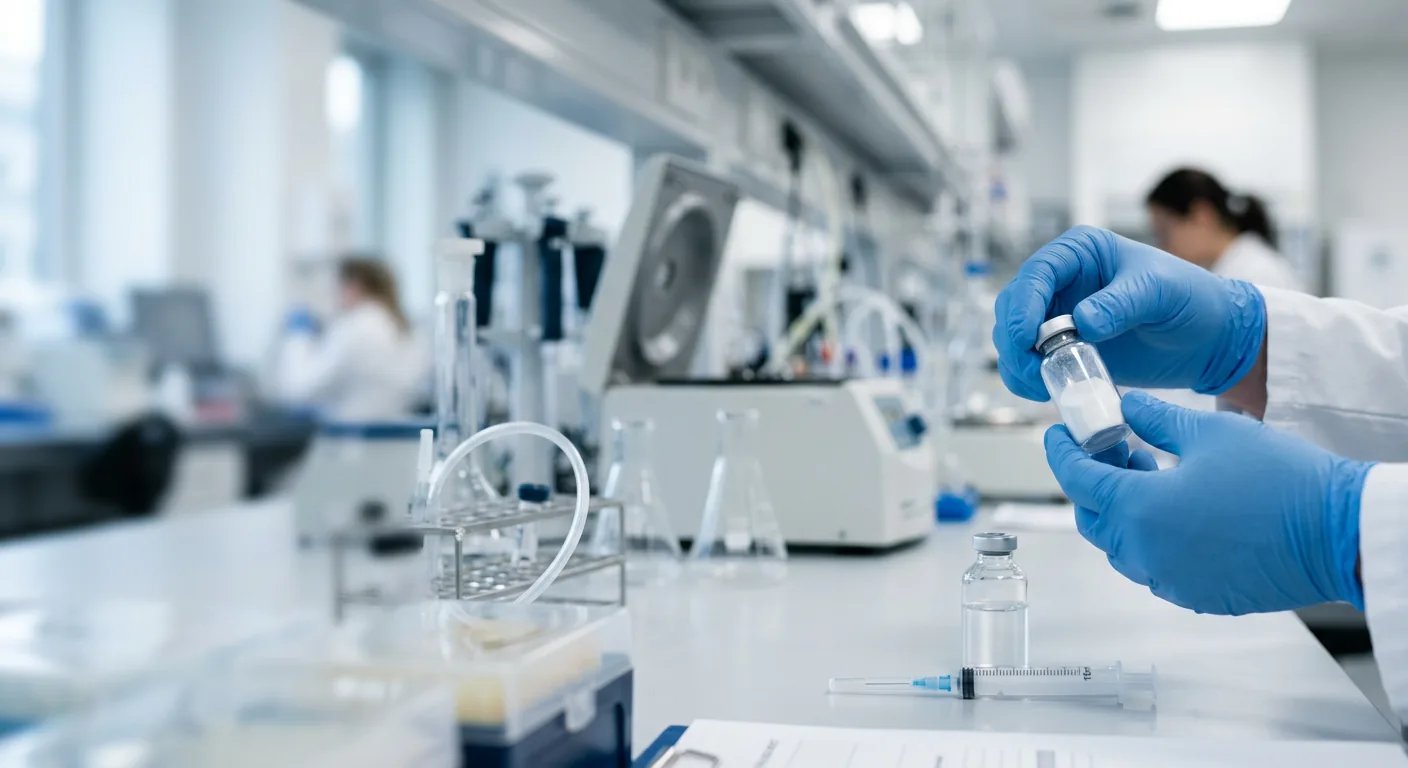
Delta Sleep-Inducing Peptide (DSIP) is an amphiphilic nonapeptide strictly designated for Research Use Only and is never intended for human consumption. In preclinical laboratory environments, researchers investigate its molecular structure and potential neuromodulatory pathways in animal models. This guide explores what is DSIP, its precise amino acid sequence, observed mechanisms, and standard reconstitution protocols for laboratory use.
Important Compliance Notice: All compounds discussed, including DSIP, are sold strictly for in vitro and animal research. They are not approved for the diagnosis, treatment, cure, mitigation, or prevention of any disease, nor are they for medical, veterinary, or cosmetic application. Researchers sourcing materials require batch-specific Certificates of Analysis confirming greater than 99% HPLC purity for valid preclinical testing. Any discussion of biological pathways is strictly limited to observed outcomes in controlled laboratory environments.
What is DSIP and what is its molecular structure?
Delta Sleep-Inducing Peptide (DSIP) is an amphiphilic nonapeptide strictly designated for Research Use Only and is never intended for human consumption. Laboratory analysis of DSIP focuses on its nine-amino-acid sequence and molecular structure, requiring high-grade synthesis methods like Solid-Phase Peptide Synthesis (SPPS).
First characterized in preclinical models, DSIP is classified as a linear neuropeptide with a well-defined primary structure[1][2]. Its amphiphilic nature arises from a specific blend of hydrophobic, neutral polar, and acidic residues, allowing it to interact with both aqueous environments and lipid membranes in experimental setups[1][3]. In laboratory environments, researchers verify the compound’s identity and purity using high-performance liquid chromatography (HPLC) and mass spectrometry.
| Molecular Characteristic | Verified Laboratory Specification |
|---|---|
| Classification | Linear amphiphilic nonapeptide[1][2] |
| Amino Acid Sequence | Trp-Ala-Gly-Gly-Asp-Ala-Ser-Gly-Glu[2][4] |
| One-Letter Code | WAGGDASGE[1][5] |
| Molecular Formula | C35H48N10O15[6][4] |
| DSIP Molecular Weight | 848.81 g/mol (Daltons)[6][4] |
| Synthesis Method | Solid-Phase Peptide Synthesis (SPPS) |
When conducting DSIP peptide research, investigators must ensure the compound matches these exact structural parameters. Any deviations in the amino acid sequence represent different peptide analogs, not canonical DSIP[7]. Because the compound is a low-molecular-weight peptide (approximately 0.85 kDa)[4], it requires stringent handling procedures to maintain stability[8]. Researchers utilizing the DSIP compound from legitimate suppliers rely on independent third-party laboratory analysis to confirm its exact molecular weight and verify that HPLC purity consistently exceeds 99%. This strict analytical verification is a necessary prerequisite before deploying the peptide in controlled in vitro or animal model studies. Ensuring batch-specific documentation guarantees the integrity of the preclinical research data.
What is the mechanism of action for DSIP in research?
Preclinical research investigates DSIP’s potential role in modulating cellular stress responses and physiological rhythms in controlled environments. DSIP mechanism studies in preclinical models focus on its interaction with neuromodulatory pathways and endocrine systems, though its exact receptor and primary physiological role remain unconfirmed as of 2026[9][10].
In animal models, researchers observe that DSIP crosses the blood-brain barrier via peptide transport systems, reaching hypothalamic tissue within approximately 15 to 20 minutes of peripheral administration[11]. Once present in neural tissue, the peptide is studied for its interactions with several neurochemical networks. Experimental data indicates that DSIP modulates GABAergic activity, potentiating inhibitory tone in hypothalamic nuclei regulating corticotropin-releasing hormone (CRH) neurons without acting as a direct GABA agonist[12][13]. Furthermore, in vitro studies report that DSIP inhibits presynaptic NMDA receptors and reduces glutamate-induced calcium uptake, supporting investigations into its role in limiting excitotoxicity and preserving mitochondrial function[14].
Additional laboratory investigations focus on the peptide’s influence on the hypothalamic-pituitary-adrenal (HPA) axis. In rodent stress models, DSIP administration is observed to attenuate stress-induced surges of corticosterone and cortisol, typically reducing these levels by 30% to 50%[12][13]. The peptide also triggers the release of met-enkephalin and beta-endorphin, which subsequently interact with endogenous opioid-peptidergic systems[15][16]. Researchers further note its dose-dependent interactions with alpha-1 adrenergic receptors, modulating the enzyme responsible for melatonin synthesis in rat pineal glands[17][18]. While these pathways are actively studied in the broader preclinical peptide research catalog, all findings remain strictly confined to laboratory data. DSIP exhibits no established clinical indication or approved therapeutic mechanism, functioning solely as an experimental compound for scientific investigation.
How do you reconstitute DSIP for laboratory use?
Proper laboratory methodology requires reconstituting DSIP with bacteriostatic water and verifying batch-specific testing data before beginning controlled animal model studies. Researchers sourcing DSIP from vendors like Nautilus Peptides require batch-specific Certificates of Analysis confirming greater than 99% HPLC purity for valid preclinical testing.
When preparing the peptide for experimental use, laboratory personnel must follow strict sterile techniques to prevent contamination and mechanical degradation of the fragile nonapeptide chain. Bacteriostatic water containing 0.9% benzyl alcohol is the standard diluent, allowing multi-dose vials to remain microbiologically stable for up to 28 days when properly refrigerated[19][20].
- Equalize temperatures: Bring both the lyophilized DSIP vial and the bacteriostatic water to room temperature (20-22°C) for 20 to 30 minutes prior to reconstitution, deliberately avoiding heat spikes above 25°C[21][8].
- Sanitize materials: Wipe the rubber stoppers of both vials vigorously with alcohol prep pads and allow them to air dry completely before puncturing the seal[22][23].
- Draw the diluent: Use a sterile syringe to draw the required volume of bacteriostatic water, equalizing the pressure to ensure an accurate draw[22][24].
- Inject slowly down the wall: Insert the needle into the DSIP vial at a slight angle. Depress the plunger slowly so the water runs down the inner glass wall rather than jetting directly onto the lyophilized powder cake[22][25].
- Dissolve without shaking: Gently swirl or roll the vial between the fingers until the solution is clear and colorless. Never shake the vial, as mechanical agitation can denature the peptide[22][25].
- Store properly: Immediately transfer the reconstituted solution to a refrigerator maintained at 2-8°C (36-46°F) and protect it from light[26][27].
For further methodological details, researchers can consult a standard peptide reconstitution guide. To source third-party tested compounds for your laboratory, you can contact Nautilus Peptides to review batch-specific data.
Frequently Asked Questions
What is DSIP?
Delta Sleep-Inducing Peptide (DSIP) is a synthetic amphiphilic nonapeptide utilized exclusively in preclinical laboratory research. It is classified as a low-molecular-weight neuropeptide with a specific nine-amino-acid sequence and is strictly designated for Research Use Only, never for human consumption.
What is the mechanism of action for DSIP in research?
In animal models, DSIP is observed to modulate neuromodulatory pathways, cellular stress responses, and endocrine systems. Preclinical studies indicate it interacts with GABAergic, glutamatergic, and endogenous opioid networks, though its exact receptor target remains unidentified as of 2026.
How do you reconstitute DSIP for laboratory use?
Laboratory personnel reconstitute DSIP by slowly injecting bacteriostatic water down the inner glass wall of the vial to prevent mechanical damage to the peptide. The vial is then gently swirled – never shaken – until dissolved, and the resulting solution is stored at 2-8°C.
Where can I buy third-party tested DSIP?
Researchers can buy DSIP peptide from specialized laboratory suppliers that provide batch-specific Certificates of Analysis. Legitimate vendors verify the compound’s identity via mass spectrometry and confirm greater than 99% HPLC purity prior to distribution for preclinical studies.
References
- Delta-sleep-inducing peptide. https://en.wikipedia.org/wiki/Delta-sleep-inducing_peptide (2006-10-07)
- Delta Sleep Inducing Peptide – an overview. https://www.sciencedirect.com/topics/neuroscience/delta-sleep-inducing-peptide (2025-09-26)
- TARGET DOSSIER: DSIP (Delta Sleep-Inducing Peptide). https://peptiderecon.com/target-dsip (2024-10-08)
- Delta Sleep Inducing Peptide DSIP 62568-57-4 – Sigma-Aldrich. https://www.sigmaaldrich.com/AU/en/product/sigma/d4072 (2025-12-03)
- What Is DSIP? Structure, Sequence & U.S.–Made Peptides. https://peptidetech.co/what-is-dsip-structure-sequence-u-s-made-peptides/ (2025-10-14)
- DSIP. https://www.drugfuture.com/chemdata/DSIP.html (2023-01-01)
- DSIP Peptide | DSIP Synthetic Hormone. https://www.prospecbio.com/dsip (2016-01-01)
- DSIP Vial Size — Storage, Dosing, and Lab Use. https://www.realpeptides.co/dsip-vial-size-storage-dosing-lab-use/ (2026-03-31)
- DSIP (Delta Sleep-Inducing Peptide) Research | MRL. https://mapleresearchlabs.com/peptide-research/dsip-delta-sleep-inducing-peptide-research-nonapeptide-neurochemistry-antioxidant-mechanisms-and-preclinical-stress-protective-evidence/ (2026-06-25)
- DSIP: Delta Sleep-Inducing Peptide Research – Kovalabs. https://kovalabs.co.uk/blog/dsip-research (2026-06-23)
- DSIP Review 2026 — Research Insights | Real Peptides. https://www.realpeptides.co/dsip-review-2026-research-insights/ (2026-03-31)
- What If: Dsip Stress…. https://www.realpeptides.co/dsip-stress-physiology-peptide-research/ (2026-03-31)
- Does DSIP Help Stress Reduction Research? Evidence Review. https://www.realpeptides.co/dsip-stress-reduction-research-evidence/ (2026-04-10)
- DSIP Peptide Research: Complete Guide | Cenexa Labs. https://cenexalabs.com/dsip-delta-sleep-inducing-peptide-research/ (2026-03-24)
- DSIP and Stress: Beyond Sleep to Neuroendocrine Effects. https://rethinkpeptides.com/articles/dsip-and-stress-neuroendocrine-modulation-beyond-sleep (2026-03-21)
- Therapeutic effects of delta-sleep-inducing peptide (DSIP … – PubMed. https://pubmed.ncbi.nlm.nih.gov/6548970/ (2026-07-10)
- DSIP Dose-Response Research | Delta Sleep-Inducing Peptide …. https://peptidehackerlab.com/compounds/dsip-dose-response/ (2026-05-29)
- Delta sleep-inducing peptide modulates the stimulation of …. https://pubmed.ncbi.nlm.nih.gov/3029331/ (2026-07-15)
- DSIP Needles Syringes — Complete Research Guide – Real Peptides. https://www.realpeptides.co/dsip-needles-syringes-research-guide/ (2026-03-31)
- DSIP Dosage Calculator. https://www.peptides.org/dsip-dosage-calculator/ (2011-07-01)
- Calculate DSIP Dosage — Research Protocol Guide – Real Peptides. https://www.realpeptides.co/calculate-dsip-dosage-research-protocol-guide/ (2026-03-31)
- Reconstituting DSIP Peptide: The Lab-Grade Method – Real Peptides. https://www.realpeptides.co/how-to-reconstitute-dsip-peptide/ (2025-12-01)
- The Complete Peptide Guide: Reconstitution, Injection & …. https://extension.health/the-complete-peptide-guide-reconstitution-injection-storage/ (2026-01-16)
- Peptide Reconstitution Instructions. https://www.youtube.com/watch?v=b08QwxZW0Ig (2025-09-20)
- DSIP Peptide Dosage: complete guide to protocols, timing …. https://www.seekpeptides.com/blog/articles/dsip-peptide-dosage-complete-guide (2026-01-19)
- DSIP Storage Guidelines – Powder & Reconstituted Solution. https://peptideinitiative.com/peptides/legacy/dsip/protocol-dosing/storage (2025-01-01)
- DSIP Peptide Dosing Guide: Timing, Protocol & Safety (2026). https://www.peptidedosingprotocols.com/protocol/dsip (2026-07-06)