
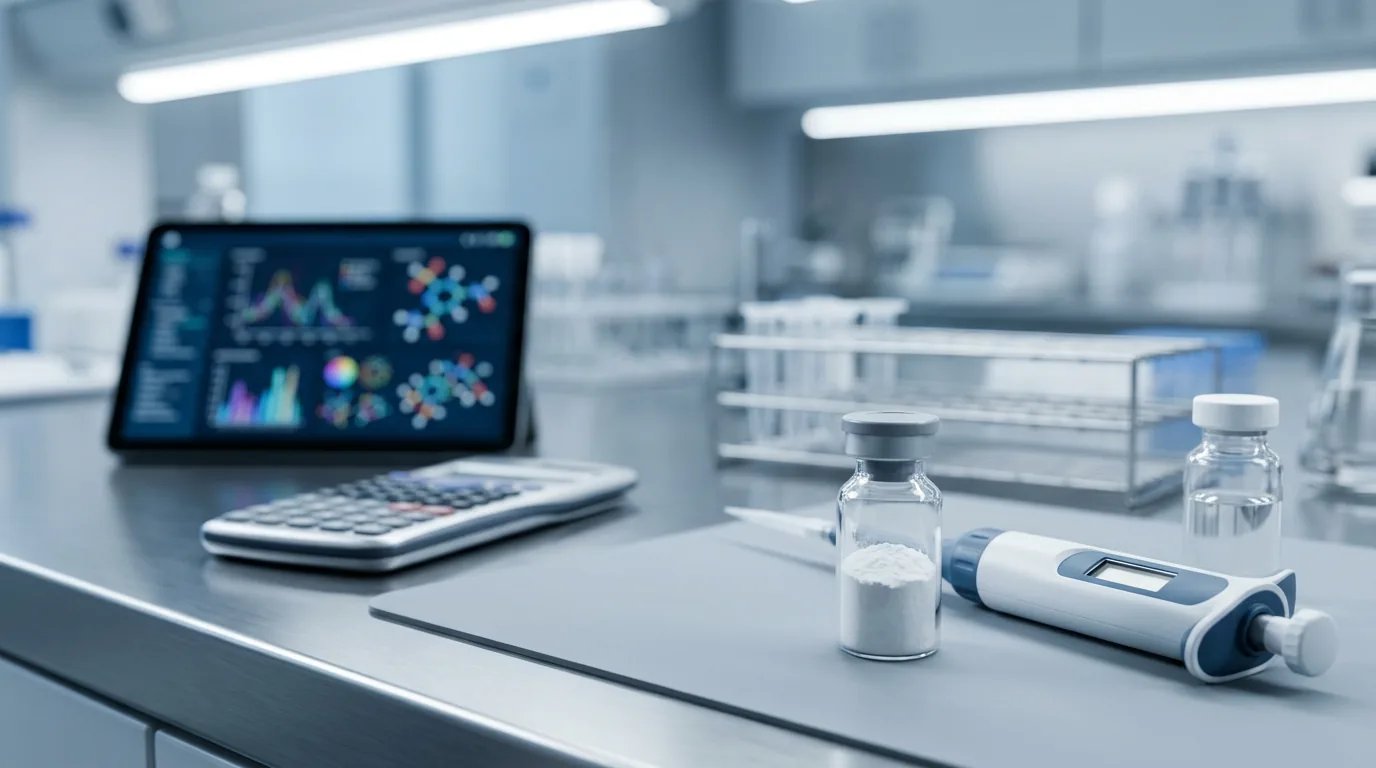
To calculate peptide concentration for laboratory research, divide the total peptide mass (like 5mg) by the exact volume of bacteriostatic water (in milliliters) added during reconstitution. Knowing how to calculate peptide concentration is a foundational skill for maintaining precision in in vitro assays. Converting milligrams to micrograms is a standard laboratory step; one milligram (1mg) of lyophilized peptide equals exactly 1,000 micrograms (mcg) for precise concentration measurements.
Important Note: All Nautilus Peptides products and reconstitution methodologies are strictly for Research Use Only (RUO). These compounds are absolutely not intended for human consumption, medical, veterinary, or cosmetic use. The methodologies described below are exclusively for laboratory personnel preparing solutions for scientific investigation.
This guide details the mathematical formulas, step-by-step conversion processes, and standardized reference tables required to calculate accurate molarity and concentration for experimental research.
What is the formula for peptide reconstitution and concentration?
To calculate peptide concentration for laboratory research, divide the total peptide mass (like 5mg) by the exact volume of bacteriostatic water (in milliliters) added during reconstitution. The fundamental mathematical formula for determining concentration is mass divided by volume, expressed as C = m/V[1][2][3][4]. Converting milligrams to micrograms is a standard laboratory step; one milligram (1mg) of lyophilized peptide equals exactly 1,000 micrograms (mcg) for precise concentration measurements[5][6][7][8].
All Nautilus Peptides products and reconstitution methodologies are strictly for Research Use Only (RUO) and are absolutely not intended for human consumption, medical, or veterinary use. When researchers prepare compounds for in vitro studies, establishing the precise stock concentration is critical for ensuring assay reproducibility and accuracy. The primary equation dictates that the volume of diluent required equals the peptide mass in milligrams divided by the target concentration in milligrams per milliliter[1][2][3][4]. For example, a 10mg vial reconstituted to a target concentration of 5mg/mL requires exactly 2mL of diluent, since 10 divided by 5 equals 2[2][4].
In laboratory documentation, maintaining consistent units across all calculations is essential. Researchers must use either milligrams with milligrams per milliliter, or micrograms with micrograms per milliliter[3][9][10]. To convert a calculated concentration from milligrams per milliliter (mg/mL) to micrograms per milliliter (mcg/mL), the laboratory protocol requires multiplying the mg/mL value by 1,000[11][12][13]. Conversely, converting from micrograms back to milligrams involves dividing by 1,000[6][7][8][14]. If an experimental protocol or a Certificate of Analysis (COA) specifies a distinct target concentration for serial dilution, the identical baseline formula applies once all variables are converted into the corresponding unit system[2][15][10]. This standard methodology ensures that researchers can properly prepare their How to Reconstitute Peptides: 2026 Laboratory Guide solutions.
How do you convert a 5mg peptide vial into micrograms?
Converting a 5mg peptide vial to micrograms requires multiplying the mass by 1,000, resulting in exactly 5,000mcg of research compound. The reconstitution process must use precise volumes of bacteriostatic water to ensure the target concentration is maintained throughout the laboratory assay. Because most lyophilized peptide vials are labeled in milligrams, whereas specific experimental assays frequently require microgram-level precision, this conversion is a mandatory preliminary step in laboratory preparation.
- Verify the initial peptide mass: Confirm the total mass using the vial label and the batch-specific Certificate of Analysis before initiating any calculations[16][3]. For a standard vial, the mass is 5mg.
- Execute the unit conversion: Multiply the milligram value by 1,000. For a 5mg vial, the calculation is 5 multiplied by 1,000, yielding a total content of 5,000mcg[17][18][19][20][12]. This total mass remains constant regardless of the diluent volume added[21][22][13][23].
- Determine the target concentration: Select the required bacteriostatic water volume based on the assay parameters. Adding 1mL of bacteriostatic water to the 5,000mcg of peptide yields a final concentration of 5,000mcg/mL[24][11][25]. Adding 2mL of bacteriostatic water yields a concentration of 2,500mcg/mL[26][27][28][29][10].
- Calculate the specific aliquot volume: To determine the volume required for a specific microgram dose in an assay, divide the desired microgram amount by the stock concentration in mcg/mL[30][31][11][32][13][23]. For example, extracting a 250mcg aliquot from a 2,500mcg/mL stock requires a volume of 0.10mL[28][33][12][13].
- Document the final solution: Record the peptide name, batch number, calculated volume of bacteriostatic water, resulting concentration in both mg/mL and mcg/mL, and the preparation date[24][16][3]. This documentation ensures strict adherence to How to Reconstitute Research Peptides: 2026 Lab Guide – Nautilus Peptides standards.
How much bacteriostatic water do I mix with a 10mg peptide?
When reconstituting standard 5mg or 10mg peptide vials with 1mL of bacteriostatic water, the resulting concentrations are 5,000mcg per milliliter and 10,000mcg per milliliter, respectively. Adding 2mL of bacteriostatic water to a 10mg vial yields a final concentration of 5,000mcg per milliliter, demonstrating how diluent volume directly scales concentration. The amount of bacteriostatic water added depends entirely on the target concentration required for the specific in vitro laboratory assay.
All reputable peptide calculation frameworks utilize the same core concentration equation: the final concentration equals the vial amount in milligrams divided by the bacteriostatic water volume in milliliters[34][35][36][37][38][39][16]. Because one milligram equals 1,000 micrograms, researchers can easily determine the microgram per milliliter value[35][40][13].
| Peptide Mass | Bacteriostatic Water Volume | Concentration (mg/mL) | Concentration (mcg/mL) | Micrograms per 0.1mL |
|---|---|---|---|---|
| 10mg | 1.0mL | 10.0 mg/mL[34][41][19][36][37][42][43] | 10,000 mcg/mL[44][45][13][43] | 1,000 mcg[44][13] |
| 10mg | 2.0mL | 5.0 mg/mL[34][46][47][36][37][48][49][43][39][50] | 5,000 mcg/mL[46][47][45][37][51][49][39][50] | 500 mcg[46][45][51][13][49][50][52] |
| 5mg | 1.0mL | 5.0 mg/mL[24][11] | 5,000 mcg/mL[24][11] | 500 mcg[24][11][12] |
| 5mg | 2.0mL | 2.5 mg/mL[26][27][28][29][10][23] | 2,500 mcg/mL[26][27][28][29][10][23] | 250 mcg[28][33][12][13] |
This quick-reference table illustrates how adjusting the diluent volume alters the final concentration. For instance, an analytical assay requiring a 5,000mcg/mL stock solution can be achieved either by adding 1mL of bacteriostatic water to a 5mg vial, or by adding 2mL to a 10mg vial. Researchers must always verify their calculations against the specific requirements of their experimental protocols. For inquiries regarding RUO compounds, researchers can reach out via the contact – Nautilus Peptides portal.
Frequently Asked Questions
How do I calculate peptide concentration?
To calculate peptide concentration, divide the total mass of the lyophilized peptide (in milligrams) by the volume of bacteriostatic water (in milliliters) added during reconstitution. This yields the concentration in milligrams per milliliter, which can be multiplied by 1,000 to find the concentration in micrograms per milliliter.
How do you convert a 5mg peptide vial into micrograms?
Converting a 5mg peptide vial into micrograms requires multiplying the milligram mass by 1,000. Therefore, a 5mg vial contains exactly 5,000 micrograms of the research compound, regardless of the volume of diluent subsequently added.
How much bacteriostatic water do I mix with a 10mg peptide?
The volume of bacteriostatic water depends on the target concentration for the assay. Mixing a 10mg peptide with 1mL of bacteriostatic water yields a 10,000mcg/mL concentration, while mixing it with 2mL yields a 5,000mcg/mL concentration.
What is the formula for peptide reconstitution?
The fundamental formula for peptide reconstitution is mass divided by volume (C = m/V). The exact volume of diluent required equals the peptide mass (in milligrams) divided by the desired target concentration (in milligrams per milliliter).
References
- Peptide Reconstitution Guide for Research | Step-by-Step. https://blackandwhitepeptides.co.uk/research/reconstitution-guide.html (2026-04-26)
- Reconstitution Math for Research Peptides: A Complete Guide | Omnix Peptides. https://omnixpeptides.com/reconstitution-math-for-research-peptides/ (2026-06-29)
- How to Reconstitute Peptides: RUO Lab Record & COA Handoff Guide. https://www.northerncompound.com/blog/how-to-reconstitute-peptides (2026-04-23)
- Reconstitution methodology for lyophilized research peptides. https://togopeptide.com/blog/reconstitution-methodology (2026-05-03)
- Milligram to Microgram (mg to μg). https://convert.app/mass/milligram-to-microgram/ (2024-10-01)
- Mg To Microgram Conversion. https://globaldatabase.ecpat.org/pdf/textbook-solutions/PDF_Files/I8A0/HomePages/Mg_To_Microgram_Conversion.pdf (2024-05-18)
- Milligrams to Micrograms Converter — Convert mg to µg (Exact: µg = mg × …. https://www.metriccalc.com/weight/mg-to-micrograms (2000-01-01)
- Convert Milligram to Microgram. https://www.unitconverters.net/weight-and-mass/milligram-to-microgram.htm (2026-07-15)
- A Researcher's Guide on How to Reconstitute Peptides – Bullit …. https://bullitpeptides.com/how-to-reconstitute-peptides/ (2026-01-01)
- Peptide Reconstitution: Complete Research Guide (2026) | Peptide …. https://peptidemind.com/peptide-reconstitution-guide (2026-04-02)
- Peptide Concentration Calculator Guide | Apex. https://apexlab.org/peptide-dosing-calculator-guide/ (2026-03-08)
- Peptide Vial Preparation, Reconstitution, and Concentration. https://pr.holladayjournal.com/article/Peptide-Vial-Preparation-Reconstitution-and-Concentration?storyId=6916e5f1ed3b2b00028da53d (2025-11-13)
- Peptide Reconstitution Calculator: 2026 Dosage & Volume Guide. https://lotilabs.com/resources/peptide-reconstitution-calculator-dosage-volume-reference/ (2026-05-28)
- How to Convert MCG to MG Accurately: A Nurse's Guide. https://www.nurse.com/nursing-resources/how-to-guides/how-to-convert-mcg-to-mg-accurately/ (2026-03-27)
- Research Peptide Reconstitution & Dosing Protocols 2026. https://palmettopeptides.com/blogs/news/research-peptide-reconstitution-dosing-guide-2026 (2026-04-04)
- How to mix peptides with bacteriostatic water safely. https://genetra.io/how-to-mix-peptides-with-bacteriostatic-water/ (2026-04-25)
- Ultimate Peptide Calculator Guide | U.S. Lab Protocols. https://99puritypeptides.com/es/peptide-calculator-reconstitution-guide/ (2026-05-16)
- Peptide Reconstitution Calculator — Volumetric Research Tool. https://clinicalpeptide.org/calculator/ (2026-06-28)
- Peptide Reconstitution Calculator | BAC Water Solver. https://peptidefox.com/tools/calculator (2026-07-18)
- Peptide Calculator | Single, Blend & Nasal …. https://bluewellpeptides.com/peptide-calculator/ (2026-02-18)
- Peptide Reconstitution Calculator | Dosage & Syringe Math. https://calculator.goldsupplier.com/peptide-calculator/ (2026-03-10)
- Peptide Reconstitution: Dosing, Mixing and Storage …. https://jaycampbell.com/peptides/peptide-reconstitution/ (2023-01-27)
- Peptide Reconstitution Calculator: The Complete Guide to. https://palmettopeptides.com/blogs/news/peptide-reconstitution-calculator-guide (2026-04-09)
- Peptide reconstitution methodology | BioHack London. https://www.biohacklondon.com/insights/peptide-reconstitution-methodology (2026-05-08)
- Peptide Reconstitution Calculator. https://palmettopeptides.com/pages/reconstitution-calculator (2026-07-08)
- Lyophilized Peptide Reconstitution Protocol. https://bacwaterdepot.com/lyophilized-peptide-reconstitution-protocol (2026-05-22)
- Peptide Reconstitution: A Complete Practical Guide. https://www.pepty.app/blog/peptide-reconstitution-practical-guide (2026-02-28)
- Peptide Calculator: Dosage & Reconstitution Tool. https://99puritypeptides.com/peptide-calculator (2026-07-18)
- How to Reconstitute Peptides: Complete Step-by-Step Guide (2026). https://peptidereconstitute.com/blog/how-to-reconstitute-peptides/ (2026-02-15)
- How to Reconstitute Lyophilized Peptides: A Step-by-Step Guide. https://glp1journal.eu/en/how-to-reconstitute-peptides/ (2026-02-21)
- How to Reconstitute Peptides with BAC Water: The Math. https://ascendbiolabs.com/blog/reconstituting-lyophilized-peptides-bac-water (2026-06-04)
- How to Calculate Dose, Volume, and Concentration. https://www.durhampeptides.ca/post/peptide-reconstitution-calculator-guide (2026-04-23)
- Complete Peptide Reconstitution Guide for Beginners | Peptide …. https://peptideclock.com/blog/complete-reconstitution-guide (2024-01-12)
- BAC Water Calculator for Peptides — How Much to Add. https://www.mypeptidematch.com/tools/bac-water-calculator (2026-07-14)
- Peptide Calculator: Reconstitution, Dosage & Syringe Units …. https://riteaid.com/tools/peptide-dosage-calculator (2026-07-09)
- PT-141 Bacteriostatic Water Ratio Calculator | Real Peptides. https://www.realpeptides.co/pt-141-bacteriostatic-water-ratio-calculator/ (2026-04-23)
- Peptide Calculator Guide for Vial-Based Research Compounds. https://www.peptideregenesis.com/blogs/peptide-blog/peptide-calculator-research-guide (2026-01-02)
- Peptide Reconstitution Calculator — Free Tool. https://peptidenerds.com/tools/reconstitution-calculator (2026-07-02)
- How Much Bac Water to Reconstitute Peptides? Doctor- …. https://freemedicaljournals.com/blog/how-much-bac-water-to-reconstitute-peptides/ (2026-05-27)
- Peptide Calculator – Reconstitution Tool. https://www.uk-peptides.com/peptide-calculator (2026-06-30)
- After reconstituting 10 mg of peptide with 1 mL of bacteriostatic water …. https://www.droracle.ai/articles/878085/how-many-milliliters-should-i-inject-after-reconstituting-10 (2026-02-22)
- How to reconstitute help. https://www.reddit.com/r/PeptideGuide/comments/1fkeqfw/how_to_reconstitute_help/ (2024-09-19)
- How Much BAC Water for 10mg BPC 157? Reconstitution …. https://freemedicaljournals.com/blog/how-much-bac-water-for-10mg-bpc-157/ (2026-06-09)
- This is a Step by Step guide to reconstitute your peptides. …. https://www.instagram.com/reel/DS5k8HzEiv0/ (2025-12-30)
- Alcohol Swabs And Aseptic…. https://agelessvitalitypeptides.com/how-to-reconstitute-peptides-with-bacteriostatic-water/ (2026-06-11)
- Peptide Calculator: Dosage & Reconstitution Tool. https://99puritypeptides.com/peptide-reconstitution-calculator (2026-05-09)
- How Much BAC Water for 10mg MOTS-c? Reconstitution …. https://freemedicaljournals.com/blog/how-much-bac-water-for-10mg-mots-c/ (2026-06-16)
- Peptide Calculator | Reconstitution Volume & Dose Units. https://www.retalabs.is/tools/reconstitution-calculator (2026-07-17)
- How to Reconstitute MOTS-c: Step-by-Step. https://peptidesexplorer.com/blog/how-to-reconstitute-mots-c (2026-06-08)
- How much bacteriostatic water to add to peptides: complete mixing guide. https://www.seekpeptides.com/blog/articles/how-much-bacteriostatic-water-to-add-to-peptides (2026-02-03)
- Common Questions. https://calcforlife.com/en-gb/peptide-calculator-uk/ (2025-12-12)
- Peptide dosing math is simpler than you think. Always add …. https://www.instagram.com/reel/DV6QDOclYZg/ (2026-03-21)