
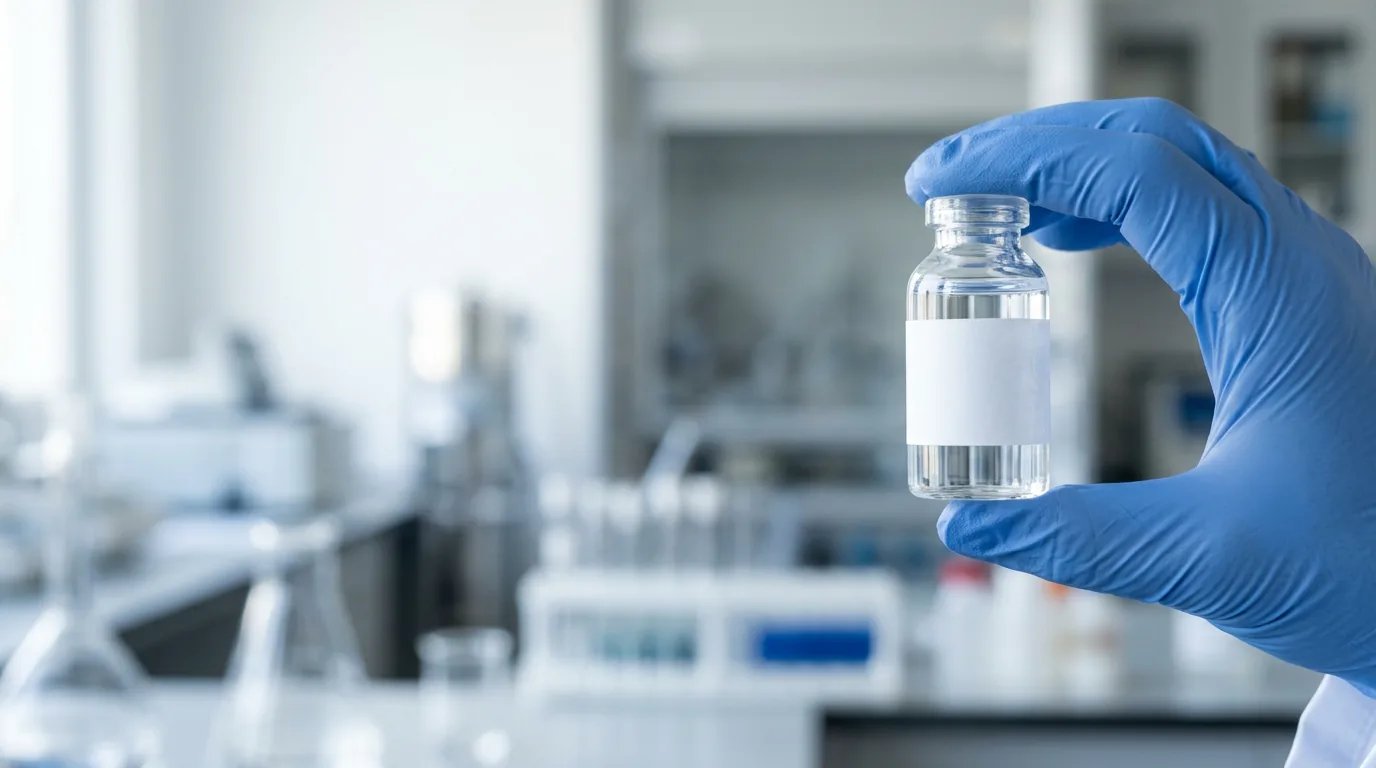
Bacteriostatic water must be stored at a controlled room temperature of 20°C to 25°C (68°F to 77°F) away from direct sunlight for optimal laboratory research stability[1][2][3]. Once the vial is punctured for laboratory use, bacteriostatic water has a strict shelf life of exactly 28 days before it must be safely discarded[4][5][6][7][8]. Researchers must visually inspect bacteriostatic water before every use; any vial showing cloudiness, particulate matter, or discoloration must be discarded immediately to maintain research integrity[9][10][11][7][3].
Research Use Only Disclaimer: All bacteriostatic water provided by Nautilus Peptides and discussed in this guide is strictly for in-vitro laboratory research use only. These compounds are never intended for human or animal consumption, medical, veterinary, or cosmetic use.
Understanding how to store bacteriostatic water properly prevents contamination and ensures that reconstituted research compounds remain stable during laboratory investigation. This guide details the strict temperature controls, the 28-day post-puncture shelf life, and the visual inspection protocols required to maintain bacteriostatic water viability in a controlled research setting.
How do you store bacteriostatic water after opening?
Once opened, bacteriostatic water must be stored at a controlled room temperature of 20°C to 25°C (68°F to 77°F) in a clean, dry environment away from direct light[1][6][2][3]. Once the vial is punctured for laboratory use, bacteriostatic water has a strict shelf life of exactly 28 days before it must be safely discarded[4][5][6][7][8]. While bacteriostatic water contains 0.9% benzyl alcohol to inhibit bacterial growth, this preservative degrades over time once the seal is compromised, making the 28-day discard rule absolute for maintaining research integrity[6][12][7].
Researchers often wonder if refrigeration extends this shelf life. According to safety data sheets, bacteriostatic water should not be refrigerated[13]. Refrigeration does not extend the 28-day opened-vial window[4][7]. Unopened vials can typically be stored for 12 to 24 months at room temperature, provided they are kept away from heat and moisture[14][6][11]. However, the moment a needle punctures the stopper, the 28-day countdown begins.
All bacteriostatic water provided by Nautilus Peptides is strictly for in-vitro laboratory research use only and is never intended for human or animal consumption. To ensure optimal stability, researchers must adhere to the following laboratory storage protocols:
| Storage Parameter | Recommended Protocol | Research Rationale |
|---|---|---|
| Temperature Range | 20°C to 25°C (68°F to 77°F)[1][2][3] | Maintains the stability of the benzyl alcohol preservative. |
| Refrigeration | Do not refrigerate[13] | Cold temperatures do not extend the 28-day viability window[4][7]. |
| Light Exposure | Store in a dark, dry place[15][6][11][9] | Prevents UV degradation of the solution over time. |
| Opened Shelf Life | Exactly 28 days from first puncture[4][5][6][7][8] | Preservative efficacy declines, increasing contamination risk[6][12][7]. |
By strictly controlling temperature and adhering to the 28-day discard limit, laboratories can ensure their reconstitution agents remain sterile and effective for in-vitro studies.
How can you tell if bacteriostatic water has gone bad?
Researchers must visually inspect bacteriostatic water before every use; any vial showing cloudiness, particulate matter, or discoloration must be discarded immediately to maintain research integrity[9][10][11][7][3]. The presence of any physical changes or exceeding the 28-day post-puncture limit requires immediate disposal according to standard laboratory chemical safety protocols[9][14][6][11][12][7]. In laboratory practice, visual inspection is the primary defense against using compromised solutions during peptide reconstitution[16][17][18][19][10][20].
Bacteriostatic water is manufactured as a clear, colorless, and odorless solution[19][21][20]. Any deviation from this baseline indicates that the water is no longer viable for laboratory research. Researchers must hold the vial up to a bright light source prior to extracting any liquid to verify its purity[10][7][3]. If a researcher observes any of the following signs, the vial must be discarded immediately:
- Cloudiness or turbidity: Any hazy appearance indicates potential microbial growth or chemical breakdown[9][10][11][7][20][3].
- Particulate matter: Floating particles, sediment, or visible residue mean the solution is contaminated and unsafe for research use[9][22][11][7][3].
- Discoloration: A yellow tint or any unexpected color change signifies that the bacteriostatic water has degraded[9][11][7][3].
- Unusual odor: The solution should be odorless or have a very faint benzyl alcohol scent; a strong chemical smell requires immediate disposal[7][20].
- Container damage: Cracks in the glass vial, a damaged rubber stopper, or leaks compromise the sterile environment, rendering the contents unusable[9][11][3].
Even if the bacteriostatic water appears perfectly clear and particle-free, it must still be discarded if it has been open for more than 28 days or has passed its manufacturer expiration date[9][14][6][11][12][7]. Never attempt to filter or salvage doubtful solutions; proper disposal ensures consistent in-vitro research outcomes.
Frequently Asked Questions
How do you store bacteriostatic water after opening?
After opening, bacteriostatic water must be stored at a controlled room temperature of 20°C to 25°C (68°F to 77°F)[1][2][3]. It must be kept tightly closed away from direct sunlight, and discarded exactly 28 days after the initial puncture[4][5][6][7][8].
How long does bacteriostatic water last once punctured?
Once punctured for laboratory use, bacteriostatic water lasts exactly 28 days[4][5][6][7][8]. After this window, the benzyl alcohol preservative loses efficacy, and the vial must be discarded even if the liquid appears clear[6][12][7].
Does bacteriostatic water need to be refrigerated?
No, bacteriostatic water does not need to be refrigerated. Safety data sheets explicitly state not to refrigerate the solution[13], as cold storage does not extend the strict 28-day shelf life of an opened vial[4][7].
How can you tell if bacteriostatic water has gone bad?
Bacteriostatic water has gone bad if it displays cloudiness, visible particulate matter, discoloration, or an unusual odor[9][10][11][7][3]. It is also considered compromised and must be discarded if the vial is cracked, leaking, or open for more than 28 days[9][11][3].
References
- bacteriostatic water for injection, USP HOW SUPPLIED – US. https://www.pfizermedical.com/bacteriostatic-water/storage-handling (2026-07-07)
- BACTERIOSTATIC WATER Rx only for Injection, USP. https://labeling.pfizer.com/ShowLabeling.aspx?id=4666 (2019-11-01)
- BACTERIOSTATIC WATER – DailyMed. https://dailymed.nlm.nih.gov/dailymed/fda/fdaDrugXsl.cfm?setid=ccadcf46-6a6f-436b-9bbc-17e2983a335f (2014-07-01)
- How Long Is BAC Water Good For? Shelf Life & Storage Guide. https://peptidemind.com/how-long-is-bac-water-good-for (2026-06-07)
- Bacteriostatic Water Suppliers: Sterile Water, Syringes & More …. https://www.bacteriostaticwater.com (2026-03-10)
- Lab Best Practices 2025 for Handling and Storage of Bacteriostatic …. https://herbilabs.com/lab-best-practices-for-handling-bac-water/ (2025-10-29)
- How to Store BAC Water After Opening – Arpovo Health. https://arpovohealth.com/blog/how-to-store-bac-water-after-opening/ (2025-10-20)
- Can Bacteriostatic Water Expire or Go Bad?. https://wittmerrejuvenationclinic.com/can-bacteriostatic-water-expire/ (2025-05-15)
- Bacteriostatic Water: Uses, Mixing Guide, Dosage, Storage & Safety. https://freebooks4doctors.com/blog/bacteriostatic-water/ (2026-05-21)
- Bacteriostatic Water for Peptides: Complete User Guide. https://www.bacteriostaticwateraustralia.com.au/how-to-use-bacteriostatic-water-for-peptides-without-ruining-your-vial/ (2026-06-08)
- Bacteriostatic Water 101: Comprehensive Guide to Its Uses and …. https://syringesneedlesdepot.com/blogs/news/bacteriostatic-water-101-comprehensive-guide-to-its-uses-and-storage-in-healthcare (2026-03-08)
- Why Bacteriostatic Water is Essential for Peptide Reconstitution. https://arpovohealth.com/blog/why-bacteriostatic-water-is-essential-for-peptide-reconstitution/ (2026-03-17)
- [PDF] SAFETY DATA SHEET – Pfizer. https://cdn.pfizer.com/pfizercom/products/material_safety_data/Bacteriostatic_H2O(Hospira)_25-Jul-2016_0.pdf (2016-07-25)
- Bacteriostatic Water for Peptide Research: Complete UK Guide (2026). https://peptideslabuk.com/bacteriostatic-water-for-peptide-research-complete-uk-guide-2026/ (2026-04-12)
- How to Store Bacteriostatic Water after Opening? – Health Supply 770. https://hs770.com/how-to-store-bacteriostatic-water-after-opening/ (2026-04-16)
- Critical Bacteriostatic Water Guide [2026] – PurePep Vital. https://www.purepepvital.com/blog/bacteriostatic-water-for-peptides (2026-03-07)
- Understanding Peptide Reconstitution: Bacteriostatic Water vs …. https://uaepeptides.com/peptide-reconstitution-guide/ (2026-06-23)
- Choosing the Right Reconstitution Solution for Peptide Research. https://uaepeptideresearch.com/reconstitution-solution-or-bacteriostatic-water/ (2026-02-20)
- Bacteriostatic Water for Peptide Research: What It Is | | Palmetto …. https://palmettopeptides.com/blogs/news/bacteriostatic-water-for-peptide-research (2026-04-09)
- Your eyes are your first line of defense. Good BAC Water: Crystal …. https://www.instagram.com/p/DTkvuNtFEa3/?hl=en (2026-01-16)
- Reconstitution Solution vs. Bacteriostatic Water: What's the Difference?. https://polarispeptides.com/reconstitution-solution-vs-bacteriostatic-water/ (2026-03-18)
- How to mix peptides with bacteriostatic water safely – Genetra. https://genetra.io/how-to-mix-peptides-with-bacteriostatic-water/ (2026-04-25)