What is 5-Amino-1MQ? 2026 Laboratory Research Guide

5-Amino-1MQ is a small molecule strictly for Research Use Only (RUO), investigated in laboratory settings as a targeted inhibitor of the NNMT enzyme. Researchers utilize this compound to study cellular metabolism, energy homeostasis, and NAD+ salvage pathways in preclinical models. All 5-Amino-1MQ compounds are sold exclusively for in vitro laboratory research and are strictly not […]
Solid-Phase Peptide Synthesis vs Recombinant Peptide Production
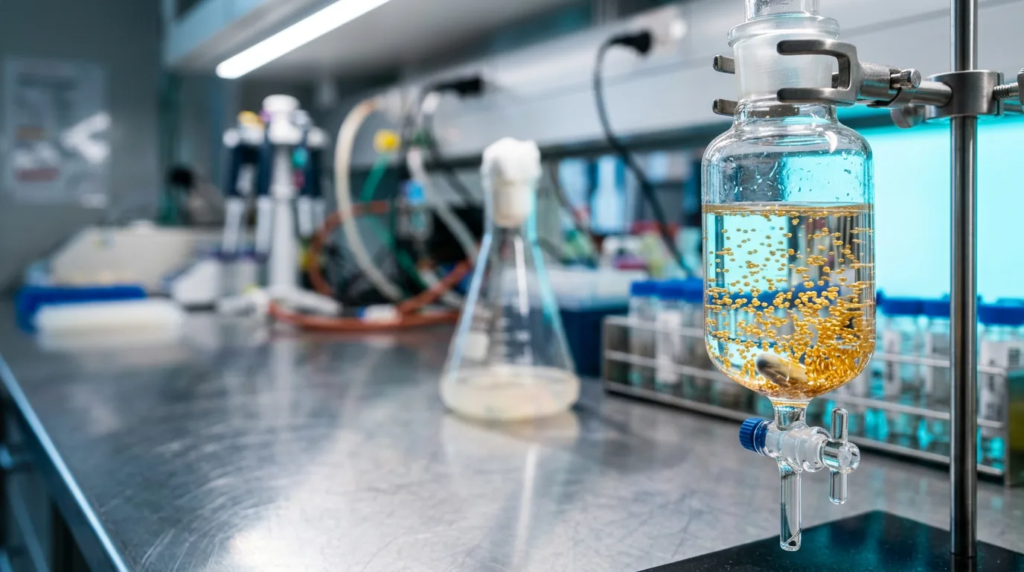
Solid-Phase Peptide Synthesis (SPPS) and recombinant peptide production are the two primary manufacturing methods for laboratory compounds, but they differ fundamentally: SPPS is a chemical synthesis method ideal for precisely controlling sequences under 50 amino acids, while recombinant expression uses biological machinery to scale larger proteins. For laboratory buyers comparing solid-phase peptide synthesis vs recombinant […]
KPV Peptide Research: Mechanisms & Properties (2026)

KPV is an alpha-MSH-derived tripeptide investigated strictly for laboratory research to observe its cellular mechanisms and pathways in preclinical models. In laboratory settings, researchers investigate the KPV tripeptide to understand its specific molecular properties compared to its larger parent molecule, alpha-MSH. As an isolated synthetic compound, KPV peptide research focuses on observing intracellular behavior, cellular […]
What is GHK-Cu? Preclinical Research & Mechanisms (2026)
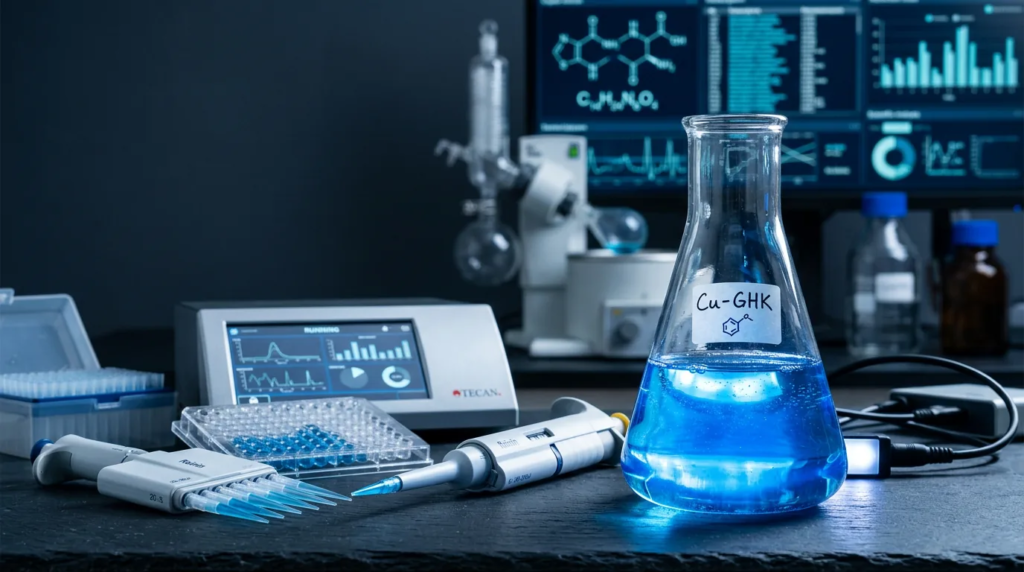
GHK-Cu (glycyl-L-histidyl-L-lysine) is a naturally occurring copper-complex tripeptide investigated in preclinical research, strictly available for laboratory Research Use Only. The compound functions as a high-affinity copper chaperone, transferring the trace metal to structural matrices and intracellular cuproenzymes while silencing its redox reactivity. Preclinical studies analyzing GHK-Cu focus on its cellular pathways and copper-binding mechanisms, utilizing […]
What is SS-31 Peptide? Preclinical Mechanisms (2026)
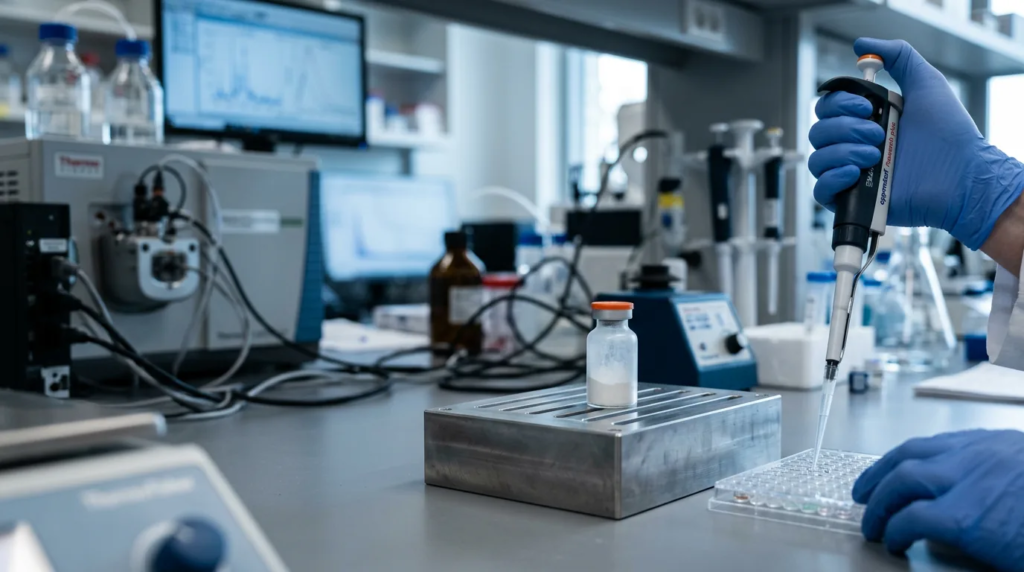
SS-31, also known as elamipretide, is a mitochondria-targeted tetrapeptide sold strictly for laboratory research use only (RUO) and not for human consumption. ⚠️ RESEARCH USE ONLY DISCLAIMER: The information provided in this article and the compounds discussed are intended strictly for in vitro and in vivo preclinical laboratory research. SS-31 is not approved for human […]
What is Solid-Phase Peptide Synthesis (SPPS)? 2026 Guide
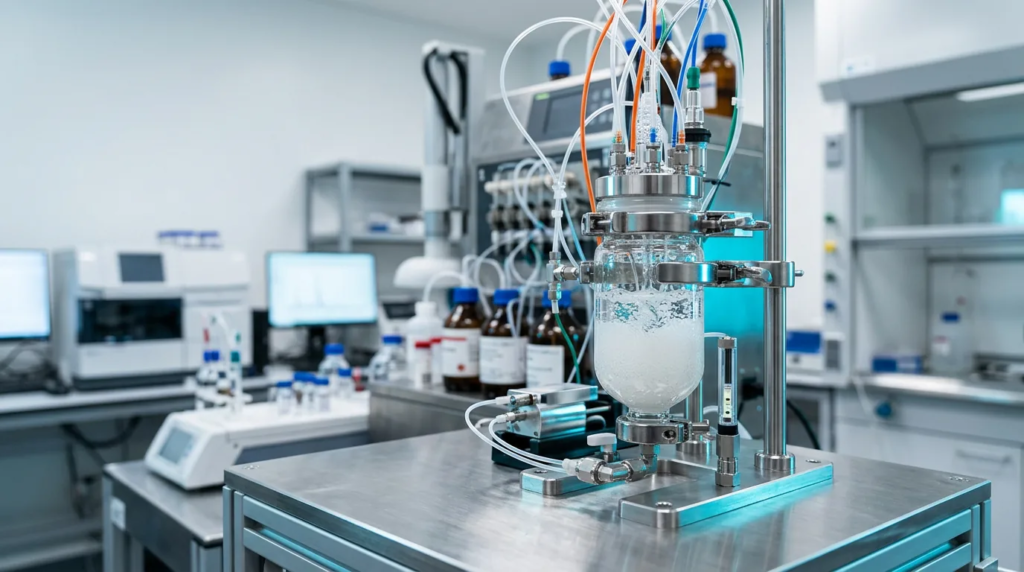
Solid-Phase Peptide Synthesis (SPPS) is the standard laboratory methodology used by vendors like Nautilus Peptides to manufacture research compounds strictly for non-human Research Use Only. By assembling complex amino acid chains on an insoluble solid support, researchers can easily wash away excess reagents to consistently yield greater than 99% purity[1][2]. Modern SPPS allows for the […]
CJC-1295 No DAC and Ipamorelin: Preclinical Mechanisms (2026)

CJC-1295 No DAC and Ipamorelin are growth hormone secretagogues investigated in laboratory models for their synergistic binding to the ghrelin and GHRH receptors. In preclinical research, this combination is evaluated for its ability to amplify growth hormone (GH) secretion without causing long-term receptor desensitization. Both CJC-1295 No DAC and Ipamorelin are strictly for Research Use […]
What is MOTS-c? Mechanism of Action in Research (2026)

The MOTS-c peptide is a mitochondrial-derived peptide investigated in laboratory settings for its role in cellular metabolic regulation and AMPK pathway activation[1][2]. Preclinical studies observe that this 16-amino acid compound targets the AMPK pathway, a primary cellular mechanism responsible for regulating energy metabolism[3]. Lyophilized MOTS-c supplied by Nautilus Peptides is strictly for laboratory research use […]