How to Spot a Fake Peptide COA: 2026 Research Guide

A legitimate Research Use Only (RUO) peptide Certificate of Analysis (COA) must feature an independent lab name, batch-specific lot numbers, and both HPLC and mass spectrometry data. Fraudulent peptide COAs often display critical red flags, such as blurred independent laboratory names, missing lot numbers, or identical testing dates copied across multiple research batches. For rigorous […]
How to Read a Peptide Mass Spectrometry Report (2026 Guide)
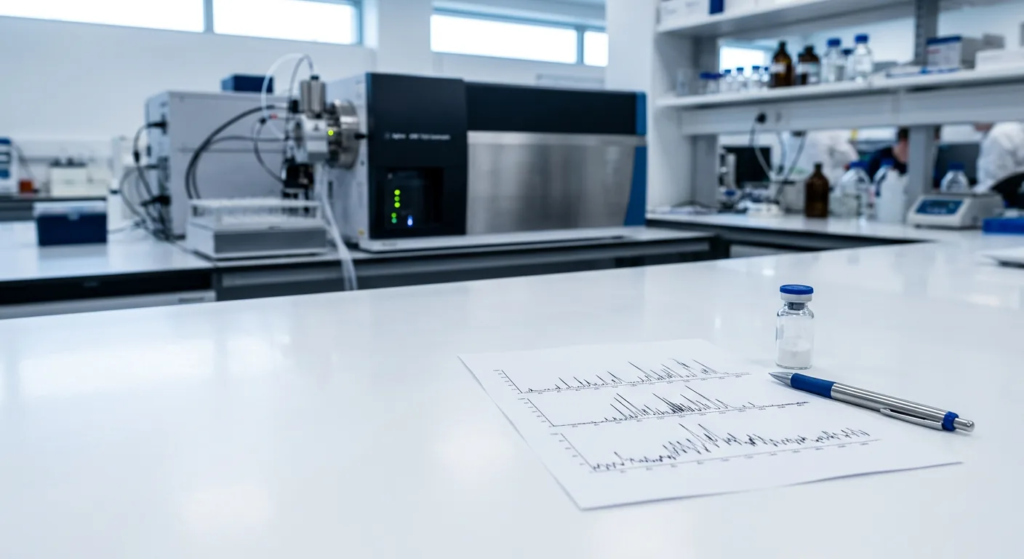
A peptide mass spectrometry report is a laboratory document that verifies a Research Use Only compound’s exact molecular weight and identity by measuring its mass-to-charge ratio. These compounds and their corresponding mass spectrometry reports are strictly for Research Use Only and are not intended for human consumption or medical use. While HPLC testing confirms a […]
HPLC vs Mass Spectrometry Peptide Testing: 2026 Guide
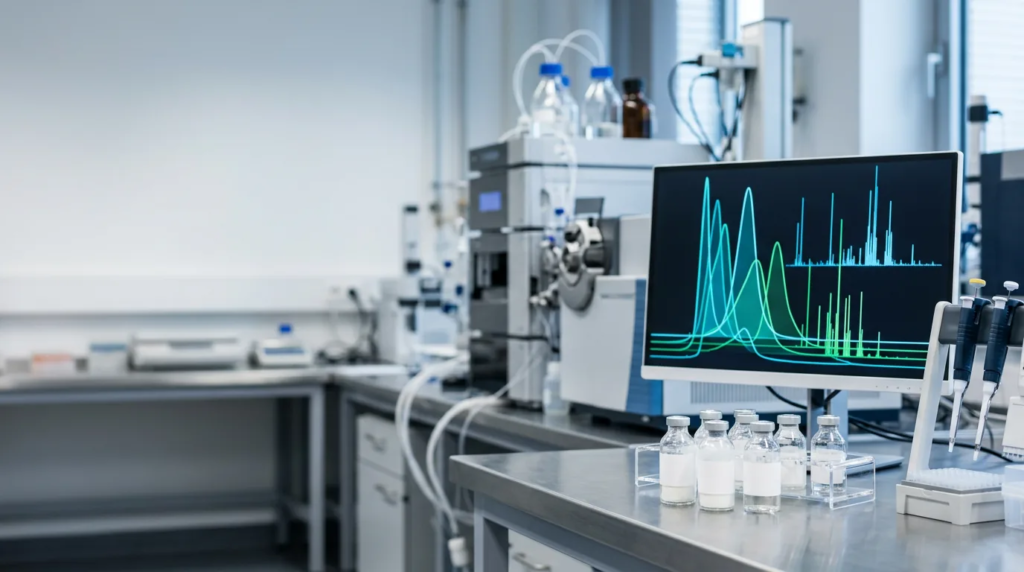
To verify Research Use Only (RUO) peptides, laboratories require both analytical tests: HPLC confirms the purity percentage, while mass spectrometry confirms the exact molecular identity. Understanding HPLC vs mass spectrometry peptide testing is critical for laboratory buyers evaluating a Certificate of Analysis (COA). A single testing method cannot provide complete verification. Nautilus Peptides provides batch-specific […]