
How to Reconstitute Peptides: 2026 Laboratory Guide
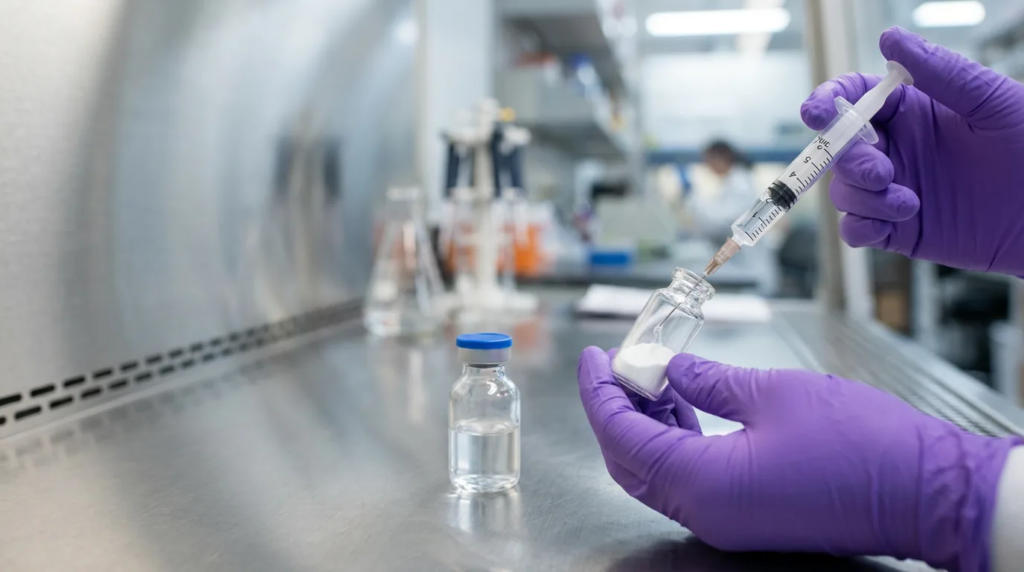
Reconstituting research peptides involves dissolving lyophilized powder with a sterile solvent, typically bacteriostatic water, strictly for in vitro laboratory analysis and Research Use Only (RUO). This process requires precise temperature acclimation and gentle mixing to preserve the compound’s molecular integrity before laboratory testing begins. All peptide reconstitution protocols—and Nautilus Peptides products—are strictly for Research Use […]
How to Store Research Peptides: 2026 Laboratory Guide
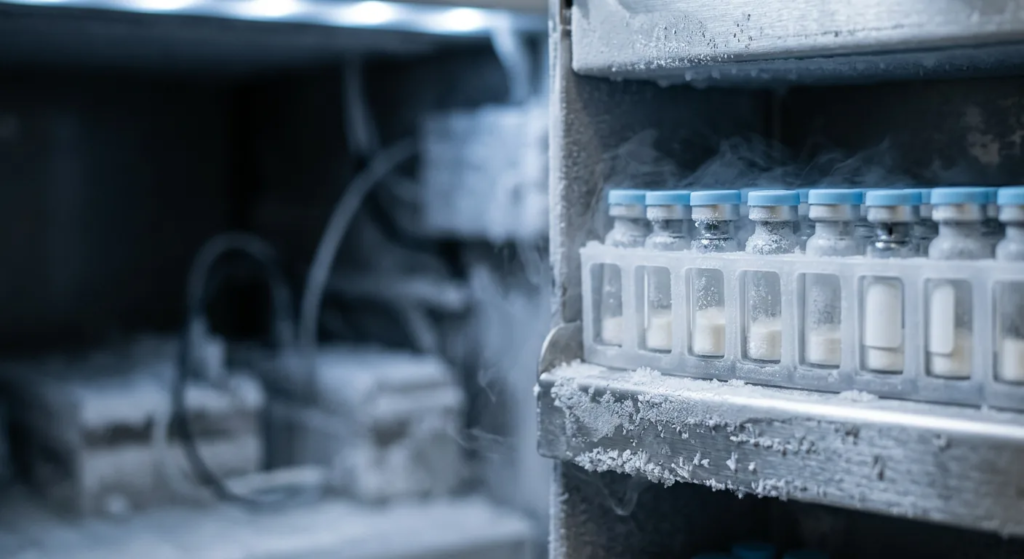
To maintain structural integrity, laboratory professionals must know exactly how to store research peptides correctly: lyophilized compounds require storage at -20 degrees Celsius or colder for long-term stability, while reconstituted peptides require refrigeration at 4 degrees Celsius. Proper temperature control prevents rapid degradation and ensures reproducible assays. Mandatory RUO Note: All Nautilus Peptides products and […]
How to Reconstitute Research Peptides: 2026 Lab Guide
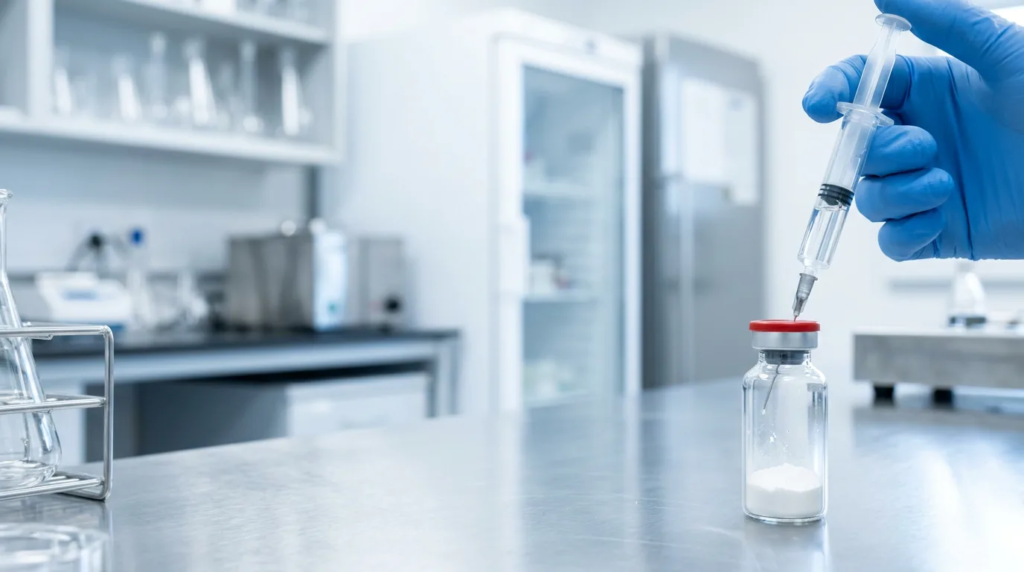
Reconstituting research peptides requires adding a precise volume of bacteriostatic water to a lyophilized vial, strictly for laboratory Research Use Only (RUO). This standard methodology ensures the structural integrity of the compound for in vitro testing. All peptide reconstitution protocols and bacteriostatic water supplies are strictly for laboratory research and are explicitly not for human […]
How to Store Bacteriostatic Water: 2026 Lab Storage Guide
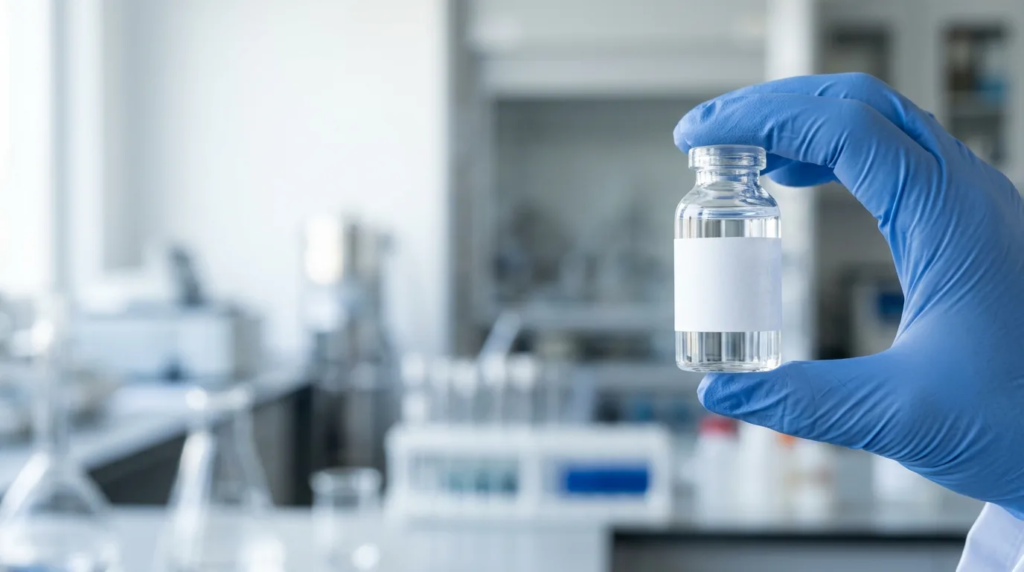
Bacteriostatic water must be stored at a controlled room temperature of 20°C to 25°C (68°F to 77°F) away from direct sunlight for optimal laboratory research stability[1][2][3]. Once the vial is punctured for laboratory use, bacteriostatic water has a strict shelf life of exactly 28 days before it must be safely discarded[4][5][6][7][8]. Researchers must visually inspect […]
How to Store Research Peptides: Lab Storage Guide (2026)
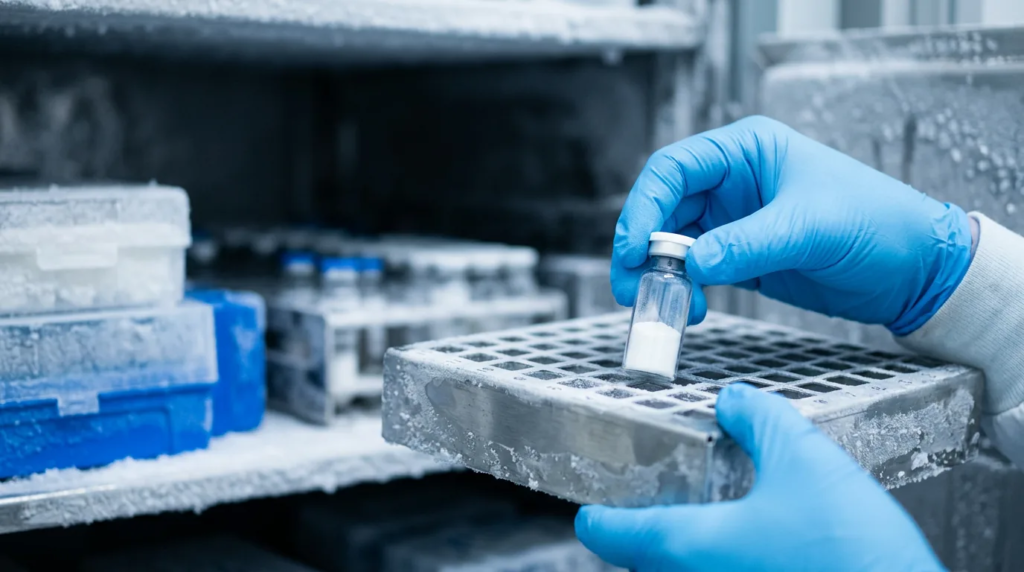
For laboratory research, lyophilized peptides should be stored in a deep freeze at -20 degrees Celsius to maximize shelf life and maintain compound stability. Once reconstituted with bacteriostatic water, Research Use Only (RUO) peptides must be refrigerated between 2 and 8 degrees Celsius and utilized within 30 days. Proper handling protocols are critical to prevent […]
How to Reconstitute Peptides: Lab Protocol (2026)
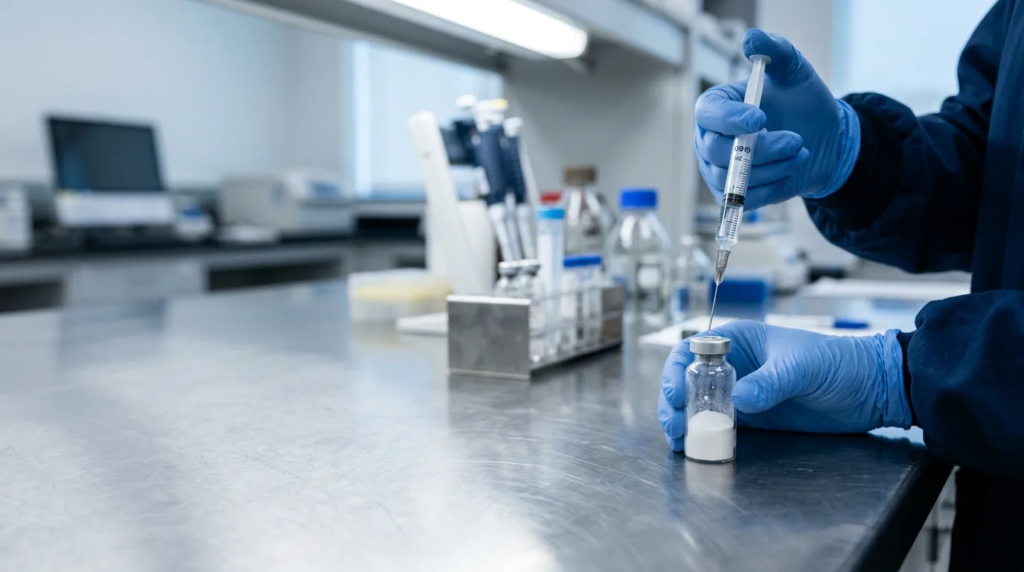
Reconstitution is the controlled laboratory process of adding a sterile solvent, typically bacteriostatic water, to a lyophilized research peptide to prepare it for in vitro study. This procedure ensures accurate molarity and preserves molecular stability for preclinical applications. All lyophilized peptides and reconstitution solvents provided by Nautilus Peptides are strictly for Research Use Only (RUO) […]
How to Store Research Peptides: 2026 Laboratory Guide
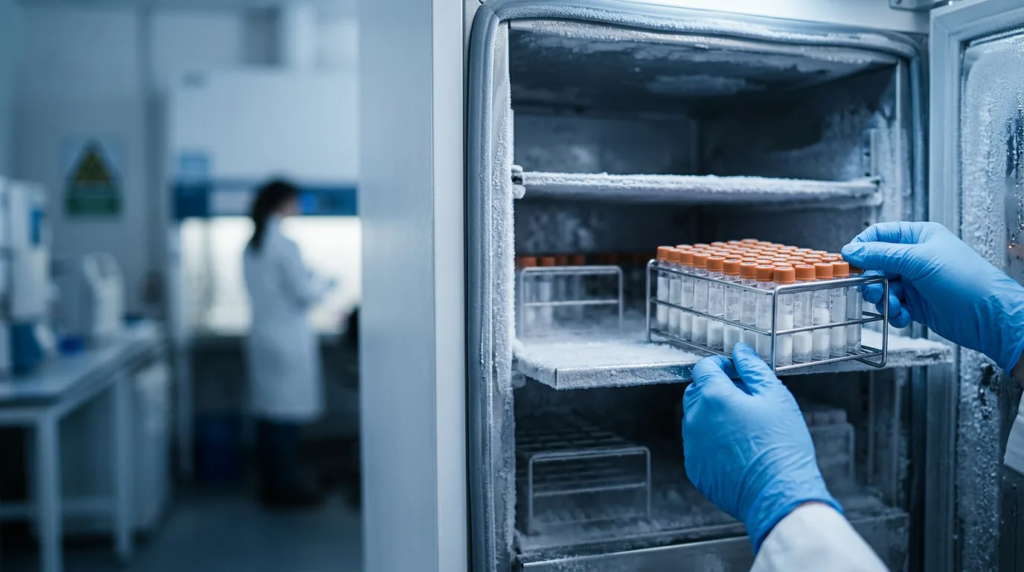
For optimal stability, researchers must store lyophilized Research Use Only (RUO) peptides at -20°C for long-term preservation, or at 4°C for short-term laboratory handling under 30 days. How to store research peptides correctly is a foundational laboratory protocol, as improper temperature control, ultraviolet light exposure, and ambient humidity rapidly degrade these high-purity compounds. All peptide […]
How to Store Research Peptides: 2026 Lab Storage Guide
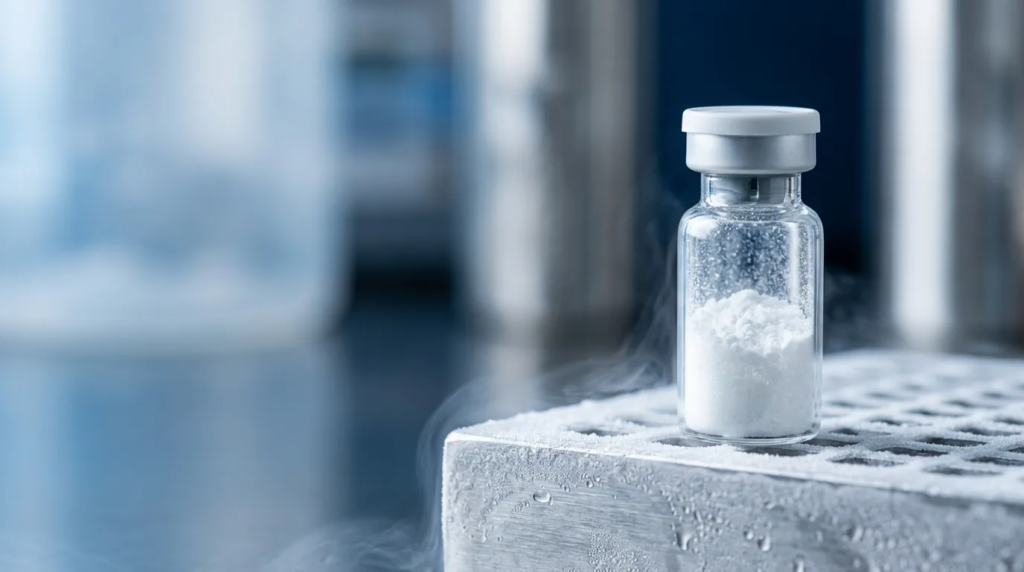
To maintain greater than 99% purity, laboratory personnel must store lyophilized research peptides at -20 degrees Celsius for long-term stability and away from direct light[1][2]. Once reconstituted with bacteriostatic water, research peptides typically remain stable for up to 30 days when refrigerated between 2 and 8 degrees Celsius[3][4]. Understanding how to store research peptides correctly […]
Bacteriostatic Water vs Sterile Water in Research (2026)
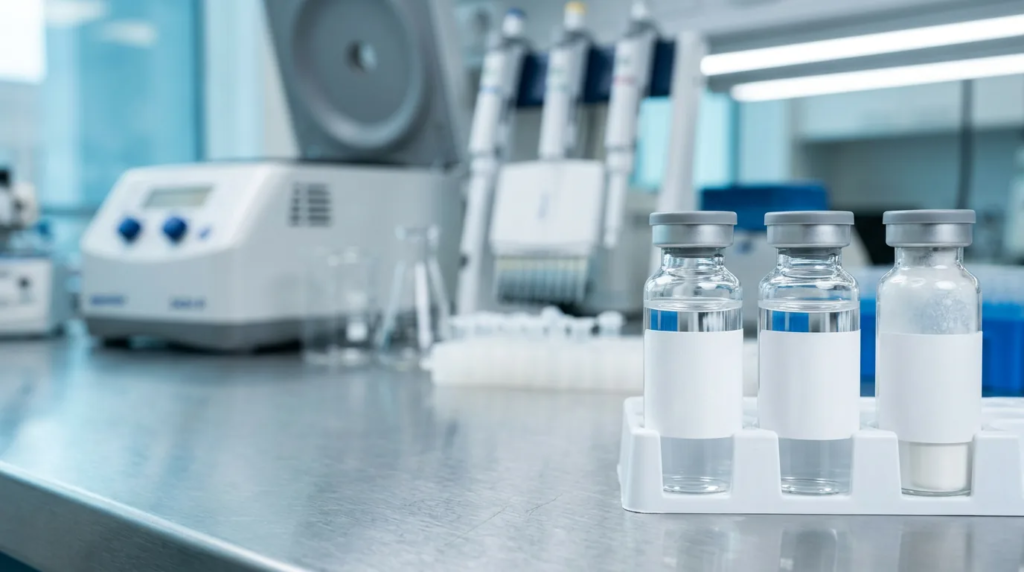
When comparing bacteriostatic water vs sterile water in laboratory settings, the primary distinction is that bacteriostatic water contains 0.9% benzyl alcohol to prevent bacterial growth for up to 28 days, while sterile water contains no preservatives for single-use reconstitution. Researchers utilizing lyophilized peptides require bacteriostatic water for multi-draw vial stability, whereas sterile water is reserved […]
How to Reconstitute Peptides for Lab Research: 2026 Guide
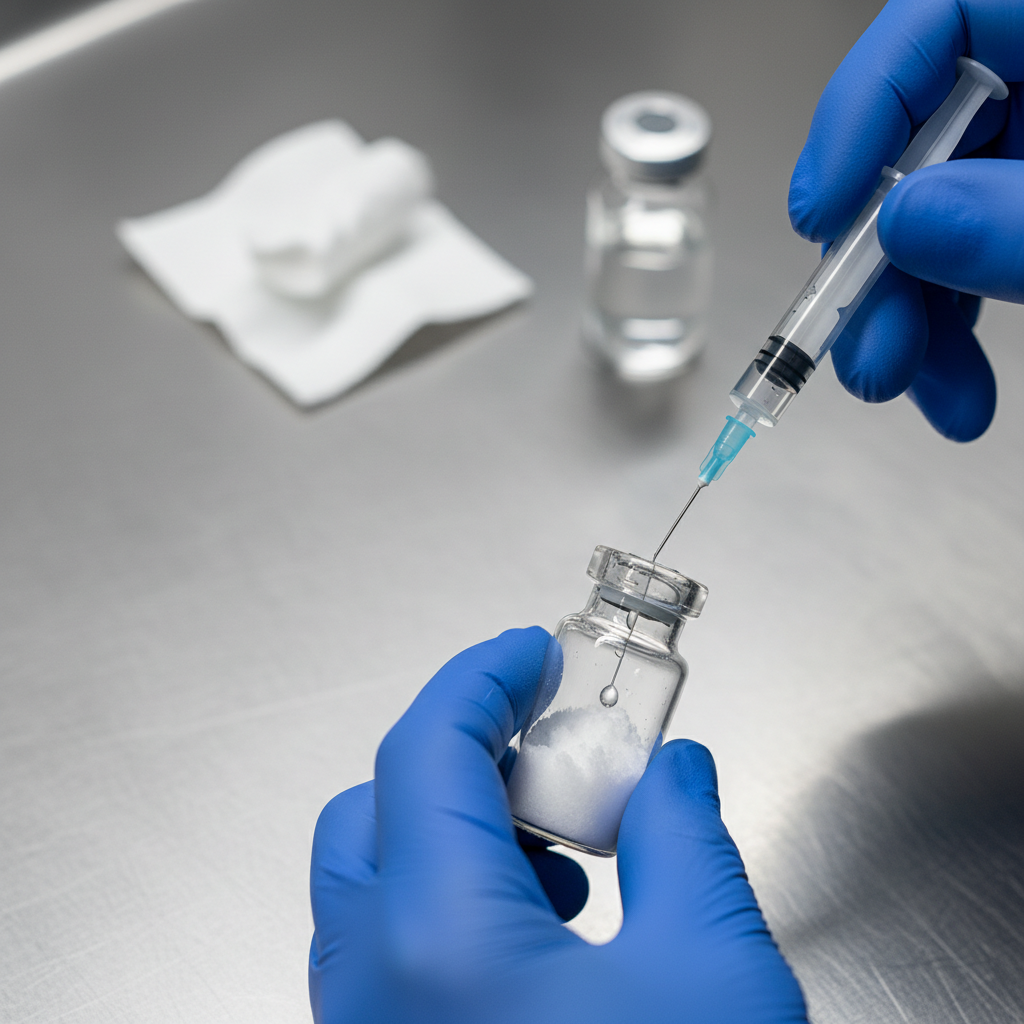
Peptide reconstitution is the process of adding a liquid solvent to a lyophilized (freeze-dried) peptide powder to create a solution for laboratory use. Proper reconstitution technique is critical for ensuring the peptide’s stability, concentration accuracy, and the overall validity of experimental results. This process is a fundamental step in preparing peptides for in-vitro research and […]